“It’s not what you say, it’s how you say it.”
Luis Alvarado has built his entire career, and now his company, on that single conviction. He is the founder of Luis Alvarado Consulting, a people-centered HR and operations practice that partners with growing organizations to build scalable, human-first foundations. Fifteen months in, working across California, New York City, and his home base in Mexico City, he is living proof that the leap into entrepreneurship is less about having a plan and more about having the courage to listen: to the market, to the people around you, and to yourself.
Born to serve
Luis didn’t arrive in HR through the traditional door. Born in Mexico and raised in California, he knew early on that the conventional path wasn’t available to him. So, out of high school, he joined the US military to open up more opportunities.
“I went to the military, served for six years, became an HR professional there, which was so interesting.”
Six years of service gave him more than a career foundation. It gave him a moral compass, a discipline around people and process, and an instinct for showing up when things get hard. From there, his path wound through industries that most HR professionals never touch in a single career: wine in Napa, beauty and skincare with international scope, food technology at Impossible Foods, robotics, and large-scale consumer-packed goods at Mars where he was managing M&A, integrating organizations of up to 3,000 people at a time, and operating as a head of people from an international perspective.
Each stop added a layer. But one stood apart.
“Impossible Foods is my baby to this day. That’s really where I learned not only a moral compass, but what I’m doing, how I’m doing it, and what I’m doing it for.”
Forced fractional
Luis didn’t leave corporate on his own terms. Like many founders, the decision was made for him.
“I was forced fractional. The decision was made for me, and it allowed me to think about becoming a founder of my own.”
He says this without bitterness. What comes through instead is the quiet clarity of someone who needed a push to do what he was always going to do eventually. What corporate couldn’t give him was the freedom to lead without politics, to give advice without agenda, and to build relationships with CEOs who trust him enough to call late at night after a board meeting.
“I also need to be okay with you giving me a call at 9pm and be like: ‘My board meeting just ended. This is what happened. I need to download on you.’”
For Luis, the real work has never lived in a policy document. It lives in those phone calls, having the hard conversation nobody wants, and nurturing the relationship that holds when things get difficult.
374 one-on-ones
In his first year of business, Luis had 374 one-on-one meetings. Conversations, not pitches or selling. No asking for what Luis needed at all. Luis was there to listen, learn, and offer his support.
“It wasn’t a pitch. I think I created like four pitches. For me it was just getting out there and seeing what was in the market and understanding people’s needs and understanding where the market was changing from an HR perspective.”
In the listening, something happened that he didn’t plan for: he built a brand. Not the kind that gets designed in a branding session, but the kind that gets built in real time, one relationship at a time, by someone who shows up consistently and leaves people better than he found them.
One of those 374 conversations was with someone who had a quick question about a New York paid family leave policy. Luis had five minutes between meetings. He jumped on.
“That’s one of my big clients right now that I didn’t expect anything from. It was just like I have the knowledge. I can give you five minutes of my time.”
He calls it having tentacles, a network of people who think of him when something comes up, because he was already there when they needed him.
Finding his people
Luis is generous about the role community has played in his first year. He found mentors who have handed him clients they felt were a better fit for him and opened doors he couldn’t have knocked on alone. His advice to anyone starting out is simple for finding your support people. Instinctively, Luis has tapped into one of the greatest pipeline sources you can find: your competition. Instead of leaning into competition, he leaned into community.
“I would say find like-minded professionals who think like you. There is a big pot of clients out there. Everybody can win. But not everybody thinks that way.”
When looking for partnership opportunities, Luis thinks of his work in three buckets: the work he loves, the work he can do but doesn’t prefer, and the work that keeps the lights on. The key, he says, is finding people around you who fill the gaps. Colleagues, coaches, and facilitators who do the things you don’t, so that you can go deeper on the things you do. That is the value of a strategic partnership; everyone can win!
“Find people that do something you don’t do and start to have those conversations.”
Beyond the wildest dream
Fifteen months in, Luis pauses when asked whether this is the life he dreamed of. He gets visibly emotional.
“I did not dream of this. It’s more than I could have dreamed of from what I’m doing and the people that I’m meeting, to the conversations just like this one that I’m having now. It’s fulfilling in every which way.”
To anyone sitting on the edge of their own leap, he has one more thing to say.
“Take the leap. It’s going to be scary. There is no security blanket. You are your security blanket. But there’s also this incredible moment where you’re like, whoa, I’m my security blanket and I have made this happen.”
And his parting advice for anyone considering the jump into consulting?
“Everything does not have to be built out to perfection. Consulting is going to take you on a ride. Just get out there and adjust to what you are listening to and learning. Double down on the listening.”
If this conversation resonated, you’ll find more of it inside the Follow the Founder community.
We share honest conversations about leadership, brand building, AI, influence, and what it really takes to build something meaningful. No noise. No recycled advice. Just lived experience from founders who are in it.
Follow along, subscribe to our newsletter, and join the conversation. The future of founder content will not be automated. It will be intentional.
What is Deprogram and who is it designed for?
Deprogram is a methodology and program founded by Claire Marshall for high achievers who are successful externally but lost internally. It helps individuals who consistently put themselves last move away from burnout and learn to live from their own power.
Why did Claire Marshall leave her corporate CEO position?
Despite successfully scaling her team and growing revenue year-over-year during her eight years at the company, Claire left because she experienced severe burnout. She realized that her own habits—such as working back-to-back Zoom calls and setting no personal boundaries—were taking a heavy toll on her health.
Why did Claire Marshall decline a high-paying executive job offer?
Claire turned down an offer that would have placed her in the top two percent of US earners because the company asked her to start working during her one week off before beginning the role. Recognizing that this set an unhealthy precedent for boundaries, she chose her health over financial gain.
How did Claire Marshall handle her transition and recovery after quitting?
Claire took an unplanned three-month sabbatical in Tahoe to step away from calls, computers, and performance pressures. To maintain income while figuring out her next chapter, she picked up part-time marketing consulting for former clients and eventually moved from Santa Barbara to Mexico to extend her savings runway.
What challenges did Claire Marshall face when starting over at 40?
Starting over at 40 meant pushing past the societal expectation that she should be building assets rather than walking away from them. She also had to navigate financial assumptions from others while overcoming the fear of stepping into entrepreneurship without a safety net.
How does building a personal business differ from running a corporate company?
Claire notes that building a soul-driven business feels far more personal because every rejection and slow quarter lands on a deeper level. Unlike running a strategic corporate company, founding a brand centered on personal values requires managing emotional attachments to the product and navigating heightened vulnerability.
What is Claire Marshall’s key takeaway about self-worth and success?
Her central lesson is the importance of decoupling professional success from self-worth. She believes that everyone is born with inherent value, and learning to separate internal worth from external achievements or business performance is critical to true freedom.
Where did Claire Marshall’s resilience and confidence to start over come from?
Her fearlessness didn’t come from business accomplishments, but from her life experiences—traveling through 75 countries, taking one-way flights, and building a life from scratch in unfamiliar places. These experiences gave her the confidence that she could land anywhere and create something meaningful from nothing.
Want to Keep Reading?
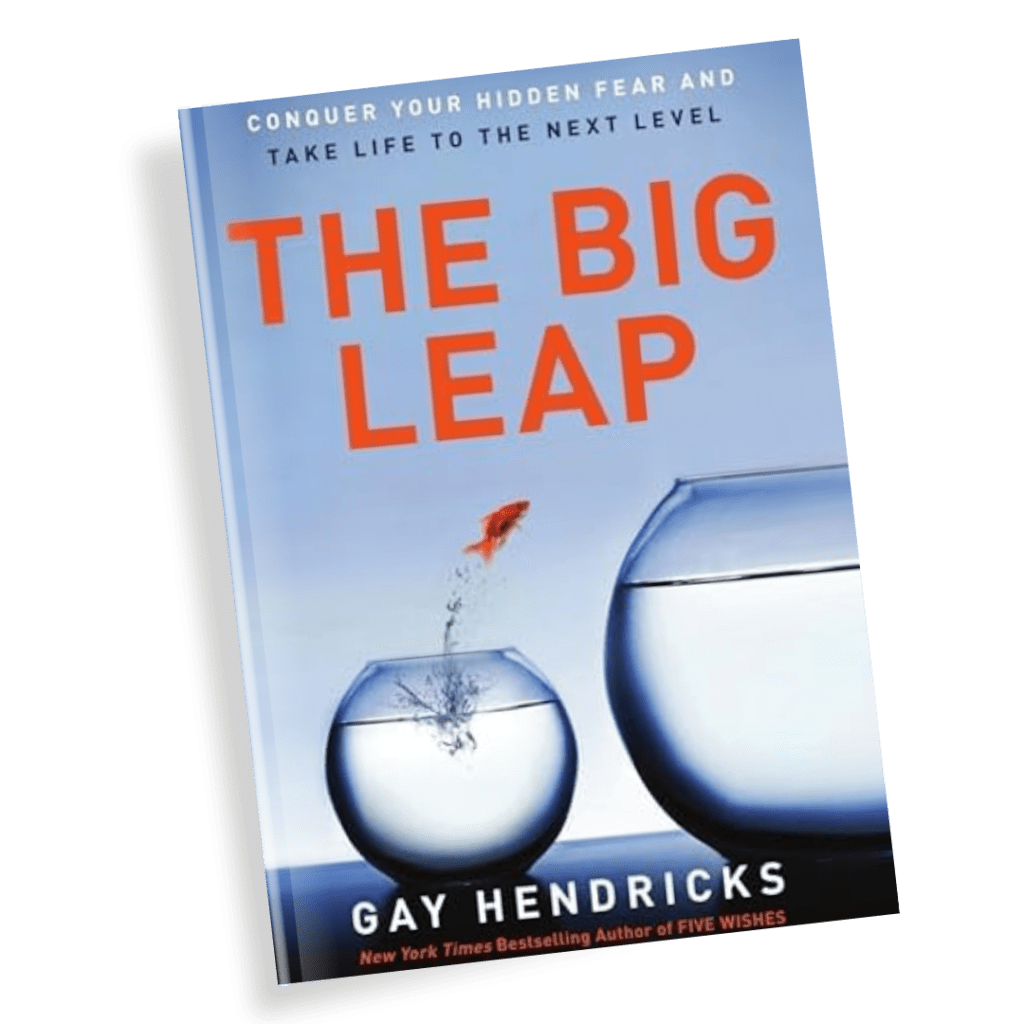
The Big Leap: Gay Hendricks
Discusses how self-imposed limits and subconscious fears hold us back, offering strategies to overcome them and step into our “Zone of Genius” for lasting success and fulfillment.