“Being a founder is a fact.” A friend told Maureen Taylor this years ago, and it stuck. Unlike entrepreneurs who can move through different ideas, choosing when to start and stop, founders are different. They’re compelled by a specific focus and drive.
For Maureen, that focus was clear: she wanted to help people connect and be understood. As co-founder of SNP Leadership Communications, alongside her husband, Renn Vara, she’s spent more than 35 years helping some of most influential leaders in Silicon Valley (the leaders whose ideas and decisions have shaped the way we live today!) to learn to connect, lead, and build culture – not because she wanted the prestige of building a successful business, but because she couldn’t imagine doing anything else.
She joined us to share what she’s learned from 35 years as a Founder…
Aristotle was my boyfriend
At San Francisco State, Maureen cycled through majors – journalism, psychology, history, geography – until she landed in classical rhetoric.
“Aristotle was my first boyfriend, (even though he’s turned out to be a scoundrel!). He was the one who was able to help people figure out how to most efficiently communicate with each other.”
This wasn’t just abstract philosophy, it was a practical lesson for Maureen: “First listen to the audience, create your content to be clear and then deliver it in a cool way.”
“I decided to get involved in this way of looking at things… because I could study anything and apply what I learned from Aristotle to that discipline.”
Aristotle’s enduring framework for communication — ethos (credibility), pathos (emotional connection), and logos (logic) — is as relevant in boardrooms today as it was in ancient Athens. For founders and leaders, credibility comes not just from expertise but from consistency and integrity; emotional connection means being real and human with your team; and logical clarity ensures that vision is understood and actionable. Maureen’s work has always drawn on these principles, helping leaders recognize that good business is built on trust, empathy, and clear reasoning — not just charisma or quick wins. In a world where messages compete for attention, Aristotle’s philosophy reminds us that effective leadership is timeless: it’s about aligning character, heart, and clarity to do good business with good people.
Aristotle himself once noted, “The more you know, the more you realize you don’t know.” For Maureen, that humility is at the core of great leadership — staying curious, questioning assumptions, and recognizing that communication isn’t about showing how much you know, but about connecting in a way that others can understand and act on.
That mix of curiosity and application became the foundation for SNP, which, true to Maureen and Renn’s ethos, stands for Smart Nice People!
Remaining a curious, lifelong student
Maureen has spent her career surrounded by people building new things.The leaders she admires most are the ones who stay students, the ones who keep learning and surround themselves with younger people who see the world differently.
“I really admire that they keep learning. They always keep young vibrant people – people in their teens and their 20s – around them, because that’s where everything happens.”
Curiosity, she says, is at the heart of her work. “We really do care about who you are, what you do, and why you matter. And we want to know.”
It’s also why she pushes founders, especially engineers, to take communication seriously. When they brush it off as ‘tips and tricks,’ she doesn’t hold back.
“You cannot be a founder and be full of bullsh*t.”
“You cannot be a founder and be full of bullsh*t. You just can’t be because it’s lonely and… it’s hard and you’re driven. So, let’s be as real as we can.”
The crazy is the connection to your purpose
Her friend Dave Morin put into words what she had always felt: “Being a founder is a fact, you cannot help it… you have this problem you’re obsessed with that you want to solve… you can’t help but do it whether you get paid for it or not.”
That kind of drive can look like craziness from the outside. Maureen embraces it.
“Love the crazy because the crazy is the connection to your purpose.”
And she is clear about what comes with it. “It is lonely and everything you say, especially if you’re in charge of something, is taken by the people that work with you in a way that you might not even mean.”
Her way through has been to lean on what she calls her ‘invisible board of directors’.
“Some people you have lunch with, some people you go running with, just spread it out a little bit, so you’re not putting too much on anybody. You’re still alone, and you have to be okay with that. But it doesn’t have to be where you want to curl up in a fetal position under your pink comforter and cry.”
Building partnerships that work
Running a company with your spouse adds its own challenges. Maureen compares it to raising a family. “I do think being founders is very much like the partnership of marriage because your employees are like having children at a daycare centre… you are responsible for them.”
What makes it work, she says, are the alignment of values and respect. “Having the same values gets you through all the miserable, hard, tough times… and then the fact that you respect each other’s core competency.”
She adds that alignment isn’t just about roles. “I think there’s two things that people have to decide if they have the same values: how they look at people and money – because those are the two biggest things in a marriage or in a partnership.”
Doing what you love on your own terms
For Maureen, the real privilege of being a founder is getting to do something you enjoy every day. “To be able to do what we love to do is such a huge privilege. People who like what they do are better at it and they’re happier people. To do what you like is very cool, because work is more like play. And, we work more than we do anything else.”
That sense of joy, she says, is possible because she’s never had to rely on anyone else to give her permission. Independence gave her choices. Her grandmother, who emigrated from Ireland and spent 27 years cleaning the Empire State Building, made her promise never to depend on anyone else financially.
“Maureen, you’ll promise me that you will never ever ever be economically dependent on [a man]. Economic independence; no matter who you are, where you are, what you are.”
It’s a promise she kept, and one she has passed on to her daughter and all the girls whe works with..
Mauren’s advice to founders
After decades supporting leaders through her work at SNP, Maureen’s advice is simple.
“Know what your founder identity is as a leader. What are your values?”
“Ours are service, accountability and curiosity. Those values are so important. And then you attract people.”
“If you understand yourself a little bit, not too much, but just enough to be able to understand that’s how you work, you will attract people.”
Maureen has spent more than three decades building clarity alongside founders and leaders, and she knows the reality of it. It can be lonely, it can feel a little crazy. But for her, that’s exactly what makes it worth doing. “Love the crazy, because the crazy is the connection to your purpose.”
Take inspiration from our network of Founders and become a part of a supportive and welcoming community by joining Follow the Founder. You can also find us on Instagram @followthefounder
How does Maureen Taylor differentiate a "founder" from an "entrepreneur"?
Drawing on insights from friend Dave Morin, Maureen views being a founder as an innate state of being rather than just a career choice. While entrepreneurs can pivot between business opportunities, founders are compelled by an intense obsession to solve a specific problem—driven to pursue it regardless of monetary reward or external circumstances.
How did classical rhetoric shape Maureen Taylor’s approach to leadership communication?
While studying classical rhetoric at San Francisco State, Maureen was heavily influenced by Aristotle’s communication framework (ethos, pathos, and logos). She translated this philosophy into a practical formula for leaders: first listen to the audience, craft logically clear content, and deliver it with genuine emotional authenticity and personal integrity.
What does "SNP" stand for in SNP Leadership Communications?
SNP stands for Smart Nice People, reflecting the core values and ethos that Maureen Taylor and her husband, Renn Vara, built their leadership communications firm upon.
What does Maureen Taylor mean when she says, "Love the crazy"?
Maureen believes that the intense drive and obsession that makes a founder look “crazy” from the outside is actually their direct connection to purpose. Rather than resisting or fearing the chaotic, high-pressure nature of founding a company, she encourages leaders to embrace it as proof of their dedication to their mission.
What are the three core values that guide Maureen Taylor’s work at SNP?
The three core values that guide SNP Leadership Communications are service, accountability, and curiosity. Maureen emphasizes that knowing your personal values as a founder is what helps you attract the right team and build a lasting culture.
How does Maureen Taylor approach co-founding a business with her spouse?
Maureen compares co-founding a business with a spouse to running a partnership in marriage or raising a family. She notes that long-term success requires complete alignment on fundamental values—specifically how you view people and money—along with deep mutual respect for each other’s distinct core competencies.
What advice about financial independence heavily influenced Maureen Taylor's career?
Maureen was deeply influenced by her grandmother, an Irish immigrant who cleaned the Empire State Building for 27 years and urged her never to be economically dependent on anyone. This commitment to economic independence gave Maureen the personal autonomy and freedom to build a career on her own terms.
Why does Maureen Taylor emphasize the importance of lifelong curiosity for leaders?
Maureen believes great leaders must remain humble, curious, and open to continuous learning. She observes that the most successful founders regularly surround themselves with younger generations (such as teens and people in their 20s) because that is where new cultural and technological shifts emerge.
Want to Keep Reading?
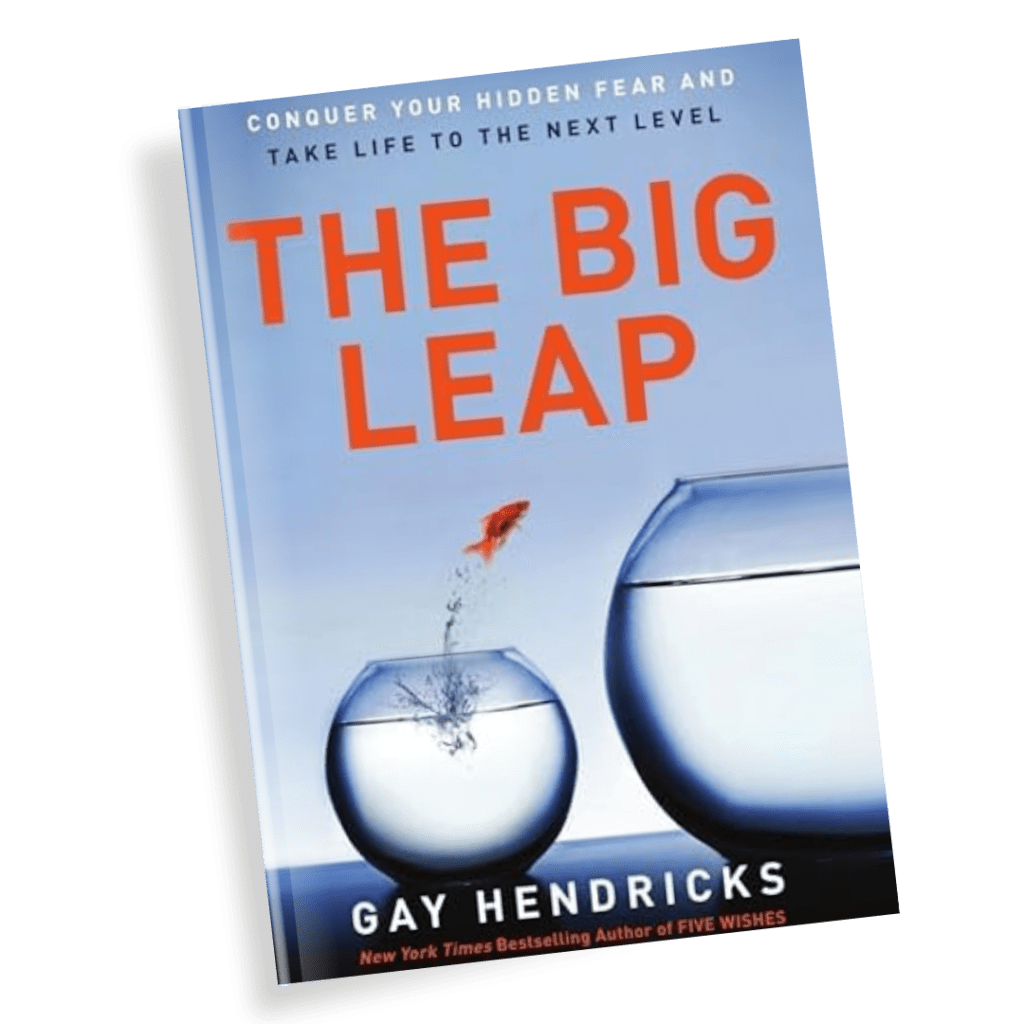
The Big Leap: Gay Hendricks
Discusses how self-imposed limits and subconscious fears hold us back, offering strategies to overcome them and step into our “Zone of Genius” for lasting success and fulfillment.