Most startup founders have a running list of things they plan to “deal with later”. Privacy policies. Compliance. Cybersecurity. Terms and conditions. Data storage. Consent forms. Governance. The backend operational stuff that feels far less exciting than product launches, investor decks or growth strategies.
The problem is that “later” has become a dangerous business strategy in tech.
For years, small businesses have operated under the assumption that regulations like GDPR, privacy laws and ethical governance only really mattered for huge corporations with legal departments and millions of users. But that gap between big business and small business is shrinking quickly, especially in an AI driven world where even tiny startups now have access to the same kinds of data collection, automation and behavioural tracking tools as major companies.
A founder can launch a business in a weekend now. They can connect analytics tools, automate customer support, collect customer emails, integrate AI workflows, build recommendation systems and process payments before they’ve even properly considered where customer data is being stored.
A lot of businesses are moving so quickly that ethical conversations simply aren’t keeping up with the technology itself.
The “Too Small To Matter” Myth
If you run a website, collect enquiries, use email marketing, track website behaviour, use AI writing tools, integrate third party software or sell products online, you are already operating within a world shaped by privacy regulations and data responsibilities. That applies whether you have five customers or five million. The idea that compliance is only for “big business” is becoming increasingly outdated.
AI has complicated this even further because many tools operate in ways most users don’t fully understand. Founders are uploading meeting notes, strategy documents, customer information, internal communications and sensitive data into external systems every single day, often without knowing exactly how that information is processed, stored or reused behind the scenes.
Many AI tools rely on enormous datasets, third party integrations and evolving policies that change rapidly, while users continue clicking “accept” without reading much further.
Where Accountability Gets Messy
That creates a strange ethical grey area because responsibility becomes blurry very quickly. If an AI hiring tool produces biased recommendations, if a chatbot gives harmful information, or if customer data is unintentionally exposed through a third party platform, where does accountability actually sit?
Increasingly, the responsibility still falls back onto the business owner, regardless of whether the mistake came from software or human error.
At the same time, most startup founders are not intentionally reckless. They are overwhelmed. Modern startup culture rewards speed above almost everything else. Founders are constantly told to move faster, automate more, scale earlier and stay ahead of competitors at all costs.
AI enters that environment offering faster workflows, cheaper labour, instant content and streamlined operations, so naturally businesses adopt it quickly. For many founders, it genuinely feels necessary to stay competitive.
That’s what makes these conversations difficult. AI is not inherently bad, and pretending otherwise is unrealistic. Most businesses are already using it in some form, often without even thinking about it. The issue is not whether founders should use AI. The issue is whether they’re willing to think critically about the systems they’re building around it before those systems become impossible to untangle later.
Consumers Are Paying Attention
Consumers are becoming significantly more aware of this too. Privacy has shifted from being a purely legal issue into something much more connected to trust and reputation. People increasingly want to know how businesses are using their information, what platforms they rely on and whether companies are being transparent about it.
This is particularly important for brands positioning themselves as ethical, inclusive or socially conscious. Audiences are becoming very good at spotting the gap between marketing language and operational reality.
You can already see this happening in conversations around Pride Month and inclusivity campaigns. Consumers are questioning whether businesses genuinely care about the communities they publicly support or whether they’re simply responding to cultural trends because it’s commercially beneficial.
Those same questions are now extending into tech ethics, data handling and AI usage. If a company talks publicly about trust, safety and community while quietly mishandling customer information or automating every human interaction, people eventually notice.
The Environmental Layer
There’s also a broader environmental layer to these discussions that founders are only beginning to grapple with. AI infrastructure requires massive amounts of energy, water and physical server capacity, despite often feeling invisible to the average user.
Conversations around sustainability tend to focus on physical products, packaging and waste, but digital industries are not consequence free. Every AI generated image, automated process and large scale data model still relies on physical infrastructure somewhere in the world.
As events like World Ocean Day continue pushing conversations around sustainability into mainstream business culture, founders may eventually need to think more critically about digital consumption as well.
The reality is that ethical business is rarely simple. Most founders are trying to balance profitability, survival, innovation and responsibility all at once. There usually isn’t one perfect answer. But there is a major difference between thoughtfully navigating difficult grey areas and refusing to think about them entirely.
Founders who ask difficult questions early tend to build stronger businesses long term because trust compounds over time in the same way reputation damage does.
The businesses that stand out over the next decade probably won’t be the ones blindly adopting every new technology first. They’ll be the ones that manage to balance innovation with responsibility, growth with transparency and automation with genuine human trust.
In a world increasingly shaped by AI, that balance may end up becoming one of the biggest competitive advantages a founder can have.
Looking beyond the business?
At Follow The Founder, we’re passionate about helping founders build businesses they’re proud of without losing themselves in the process. Because success shouldn’t come at the expense of the life you were trying to create in the first place.
If you work with international clients, travel frequently or run a business across borders, Wise can make managing different currencies and international payments much simpler.
If this conversation resonated, you’ll find more of it inside the Follow the Founder community.
We share honest conversations about leadership, brand building, AI, influence, and what it really takes to build something meaningful. No noise. No recycled advice. Just lived experience from founders who are in it.
Follow along, subscribe to our newsletter, and join the conversation. The future of founder content will not be automated. It will be intentional.
Want to Keep Reading?
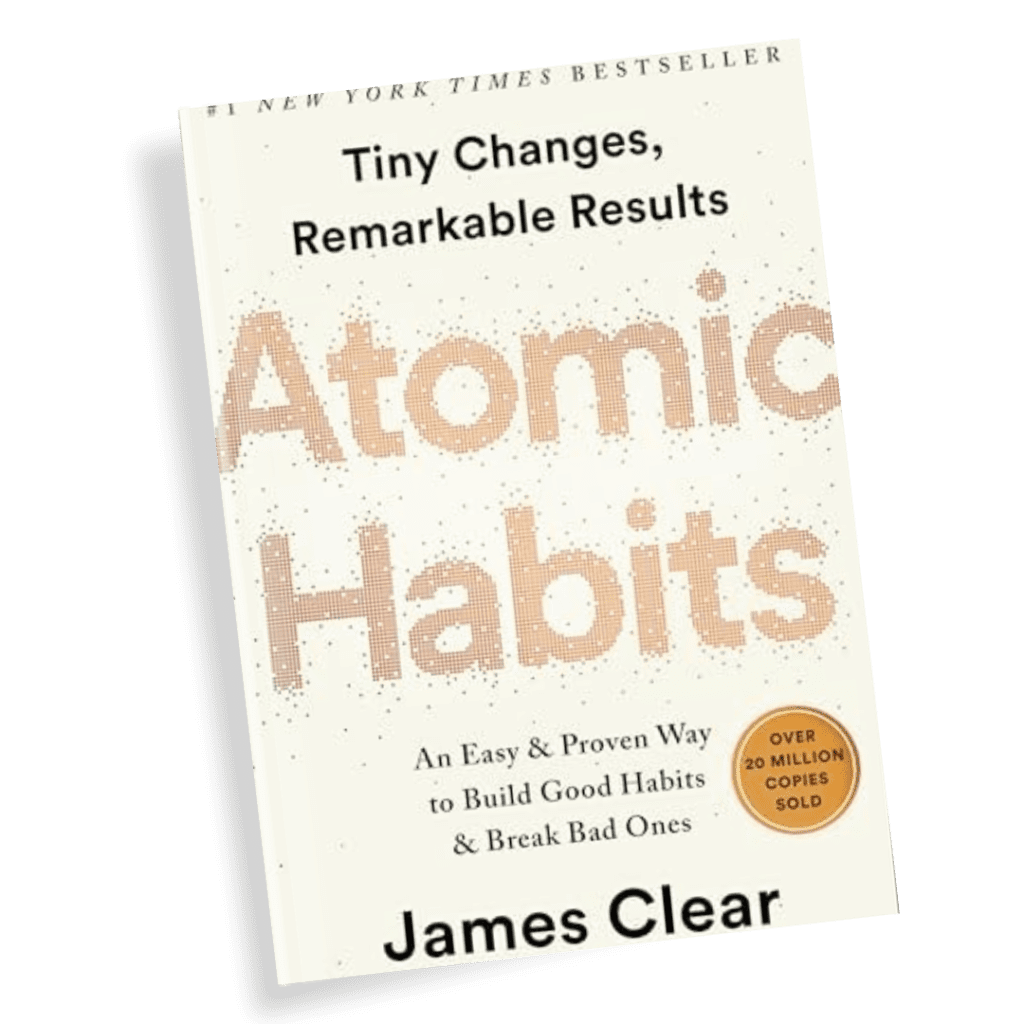
Atomic Habits: James Clear
Atomic Habits offers a proven framework for improving–every day. James Clear reveals practical strategies that will teach you exactly how to form good habits, break bad ones, and master the tiny behaviors that lead to remarkable results.