A few years ago, building a brand presence online felt like a serious undertaking. You needed a copywriter to write your blogs, a designer to create your graphics, a photographer to take your headshots, and if you were feeling particularly brave, maybe a videographer to help you dip your toes into social media. Creating brand content required time, money, many people supporting, and effort. There were barriers to entry, which could be frustrating, but they also meant that showing up online required a degree of intention.
Today, a founder can sit down with a laptop, type a few prompts into AI and generate an entire month’s worth of content before they’ve finished their morning coffee. AI can write your captions, your blogs, your newsletters and your website copy. Now it can generate your images, edit your videos, and even create a version of your face and voice that looks suspiciously like you’ve had twelve hours of sleep, perfect lighting and access to a Hollywood skincare budget.
It’s remarkable!It’s also creating a problem that more founders are beginning to notice.
The internet has never been so full of content, and yet so much of it feels exactly the same.
At Follow The Founder, we’re having more and more conversations with business owners who feel caught somewhere in the middle. They don’t want to ignore AI because it’s clearly becoming part of how modern businesses operate. Equally, they don’t want their brand to disappear into a sea of generic content that sounds like it was written by the same mildly enthusiastic marketing manager obsessed with “not this, but that” and, the now dreaded, Em Dash.
The challenge isn’t that AI exists. The challenge is that many people are using it to replace their voice instead of amplifying it. Authenticity, strong opinions, and the human aspect are quickly disappearing from the on-slaught of content we are now expected to consume.
Not the performative version of authenticity that dominated social media for the last decade. Not the carefully curated vulnerability that somehow always seemed to arrive alongside a product launch.
Because if everyone has access to the same tools, the thing that makes you different is no longer the quality of your content. It’s the perspective and authenticity behind it. The kind that comes from having opinions, sharing experiences, telling stories and allowing your personality to exist within your business and to be frank, not showing only your perfect side!
“Honestly, I think the best part of AI becoming mainstream is you can quickly distinguish what is real and what isn’t. Because what is real is never perfect. For example, I am dyslexic. I have ALWAYS been insecure about my emails, texts, and presentations because inevitably every single one of them always encapsulated a mistake my brain did not register. NOW, I feel that this is going to be my advantage. You are going to know that email or text was written by me when you catch a spelling mistake or slightly poor grammar. What used to be my kryptonite is now becoming my superpower, and it’s about damn time!” – Annalee Hagood-Earl, Founder & CEO
The Rise of AI Slop and Why Audiences Are Starting to Notice
One of the more interesting phrases to emerge from the AI boom is “AI slop”. It’s not particularly flattering, but it captures something many of us have been feeling online over the past year.
AI slop refers to the growing volume of content that exists simply because it can. If you do not know what we are referring to, take a look at your LinkedIn feed and count how many of your contacts are now “Thought Leaders” publishing long articles about their “opinions” and “observations.” It’s technically correct, often grammatically perfect and usually follows all the recommended content marketing best practices. The problem is that it rarely leaves an impression.
The issue isn’t that the content is bad. In many cases, it’s actually quite good. The issue is that it’s becoming increasingly difficult to remember who wrote it. Much of it feels anonymous. The personality has been smoothed out. The opinions have been softened. The quirks that make people memorable have disappeared in favour of content that appeals to everyone and ultimately resonates with very few.
We’ve all done it. You’ve opened a post, started reading, nodded along for a few paragraphs and then reached the end realising you couldn’t tell who wrote it if your life depended on it. It may have been useful, but it wasn’t memorable.
For founders trying to build a personal brand, this presents both a challenge and an opportunity. While it has become easier than ever to create content, it has also become harder than ever to create content that people genuinely remember. The businesses and founders who stand out are increasingly the ones willing to inject some humanity back into their content.
“I’ll admit, when we first got our hands on an LLM we also had it write A LOT of content. However, when I would read what we created to be in “my voice” I couldn’t even tell I was supposed to be the author. Quickly I could see it sounded like a lukewarm version of my extremely dynamic and intelligent self. I loved that I could sound “ more researched” than I was but I hated that my voice was so flat and boring. Not at all how I show up every day of my life. So we have pivoted and learned ways to leverage AI for gathering and organizing my thoughts, but the content now must be reviewed word for word and adjusted to be in my authentic voice with my authentic opinions and feelings.” – Annalee Hagood-Earl, Founder & CEO
Why Younger Audiences Are Craving Real Stories
Perhaps the most fascinating shift we’re seeing is coming from younger audiences. Gen Z and the emerging Gen Alpha generation have spent their entire lives surrounded by digital content. They’ve grown up with influencers, sponsored posts, algorithm-driven feeds and increasingly sophisticated marketing tactics. If any generation is equipped to identify manufactured authenticity, it’s this one.
Contrary to what many businesses assume, younger audiences aren’t necessarily looking for perfection. They’re looking for honesty. They want to know who’s behind the business, what they stand for and why they do what they do. They’re far more likely to connect with a founder sharing a genuine lesson learned from experience than a perfectly crafted corporate statement.
This doesn’t mean every founder needs to share their life story online. Nor does it mean turning every business account into a personal diary. Rather, it means recognising that stories create connection in a way information alone never can. People remember experiences. They remember moments. They remember the lessons that come from real life. What they tend to forget are generic tips that could have been generated by anyone.
The rise of founder-led brands over the past decade hasn’t happened by accident. People are increasingly choosing businesses that feel personal. They want to understand the values behind the company, the motivation behind the product and the people behind the logo.
At a time when AI can create almost unlimited content, stories have become one of the few things that can’t be mass-produced.
The One Thing AI Can’t Replicate
For all its capabilities, AI still struggles with one thing: lived experience.
It can write a blog about resilience, but it cannot tell the story about the client who nearly broke your confidence. It can create content about entrepreneurship, but it cannot explain the feeling of signing your first client, losing your biggest contract or wondering whether you’ve made a terrible mistake by starting a business in the first place.
The most compelling founder brands aren’t built on expertise alone. They’re built on perspective. They combine knowledge with experience and allow audiences to learn from both.
This is where many founders underestimate their value. The things that feel ordinary to you are often the very things your audience finds interesting. The lesson learned from a failed launch. The unexpected challenge that nearly derailed a project. The moment you changed direction in your business. The advice you wish somebody had given you five years ago.
These stories are powerful because they’re yours.
No AI tool can recreate the lessons you’ve learned, the mistakes you’ve made or the experiences that shaped your thinking. It can help you tell those stories more efficiently, but it can’t create them for you.
That’s why founder-led content continues to outperform polished corporate messaging. People don’t connect with brands because they’re perfect. They connect with them because they’re relatable.
Why We’re Suddenly Seeing AI Versions of Ourselves
Of all the trends to emerge from the AI boom, AI-generated headshots might be one of the strangest.
You’ve probably seen them. Impossibly perfect skin, flawless lighting, suspiciously symmetrical features and a smile that sits somewhere between corporate executive and Netflix dating show contestant.
The technology is undeniably impressive, but it raises an interesting question. If the goal of personal branding is to build trust, why are so many people replacing themselves with a computer-generated interpretation of who they are?
There’s something slightly ironic about introducing yourself to potential clients using what a machine thinks you look like. Particularly when audiences are becoming increasingly sceptical of content that feels overly polished or manufactured.
At Follow The Founder, we believe people connect with people. The slightly awkward photo from a real photoshoot often creates more trust than a perfectly rendered AI version of yourself. The same goes for content. A genuine story about a lesson learned will almost always outperform a post that’s technically perfect but emotionally empty.
Technology should enhance connection, not replace it.
And let’s be honest, if a computer without eyes is deciding what you look like, maybe that’s not the strongest foundation for a personal brand built on authenticity.
The Future Belongs to Human Brands
For years, businesses competed on access. Access to better technology, better production quality and better marketing resources. AI is rapidly changing that equation. The tools that were once available only to large companies are now available to almost everyone.
As a result, the founders who stand out over the next decade won’t necessarily be the ones producing the most content. They won’t be the ones chasing every trend, posting six times a day or jumping on every new platform the moment it launches.
Instead, they’ll be the founders who have something worth saying.
They’ll have a point of view. They’ll tell stories. They’ll share experiences. They’ll understand that AI can help organise ideas, streamline workflows and remove administrative burden, but it cannot replace personality, perspective or lived experience.
The future of personal branding isn’t about choosing between AI and authenticity. It’s about using technology without sacrificing the very thing that makes people want to follow you in the first place.
Your story. Your perspective. Your experiences. Your voice.
As AI becomes increasingly good at creating content, being human stops being the default. It becomes the differentiator. The founders who recognise that now will be the ones building the most trusted, memorable and resilient personal brands in the years ahead.
AI isn’t going anywhere. Nor should it.
It’s one of the most significant technological shifts most of us will experience in our careers, and founders who learn how to use it effectively will undoubtedly gain an advantage.
But the advantage won’t come from sounding exactly like everyone else.
It won’t come from publishing more content than your competitors.
And it certainly won’t come from replacing your personality with a polished collection of prompts.
The founders who thrive in the age of AI will be the ones who understand that while technology can help create content, it can’t create connection.
Connection comes from stories.Connection comes from perspective. Connection comes from allowing people to see the human behind the business.
And in a world increasingly filled with AI-generated noise, that might just become your biggest competitive advantage.
Ready to build a founder brand that people actually remember?
At Follow The Founder, we help founders uncover the stories, messaging and personal brand that sit beneath the surface of their business. Because while AI can help you create content faster, it can never replace the thing that makes your brand unique: you.
Travelling soon? Airalo makes it easy to stay connected abroad with an eSIM, without needing to buy a physical SIM when you arrive.
If this conversation resonated, you’ll find more of it inside the Follow the Founder community.
We share honest conversations about leadership, brand building, AI, influence, and what it really takes to build something meaningful. No noise. No recycled advice. Just lived experience from founders who are in it.
Follow along, subscribe to our newsletter, and join the conversation. The future of founder content will not be automated. It will be intentional.
Want to Keep Reading?
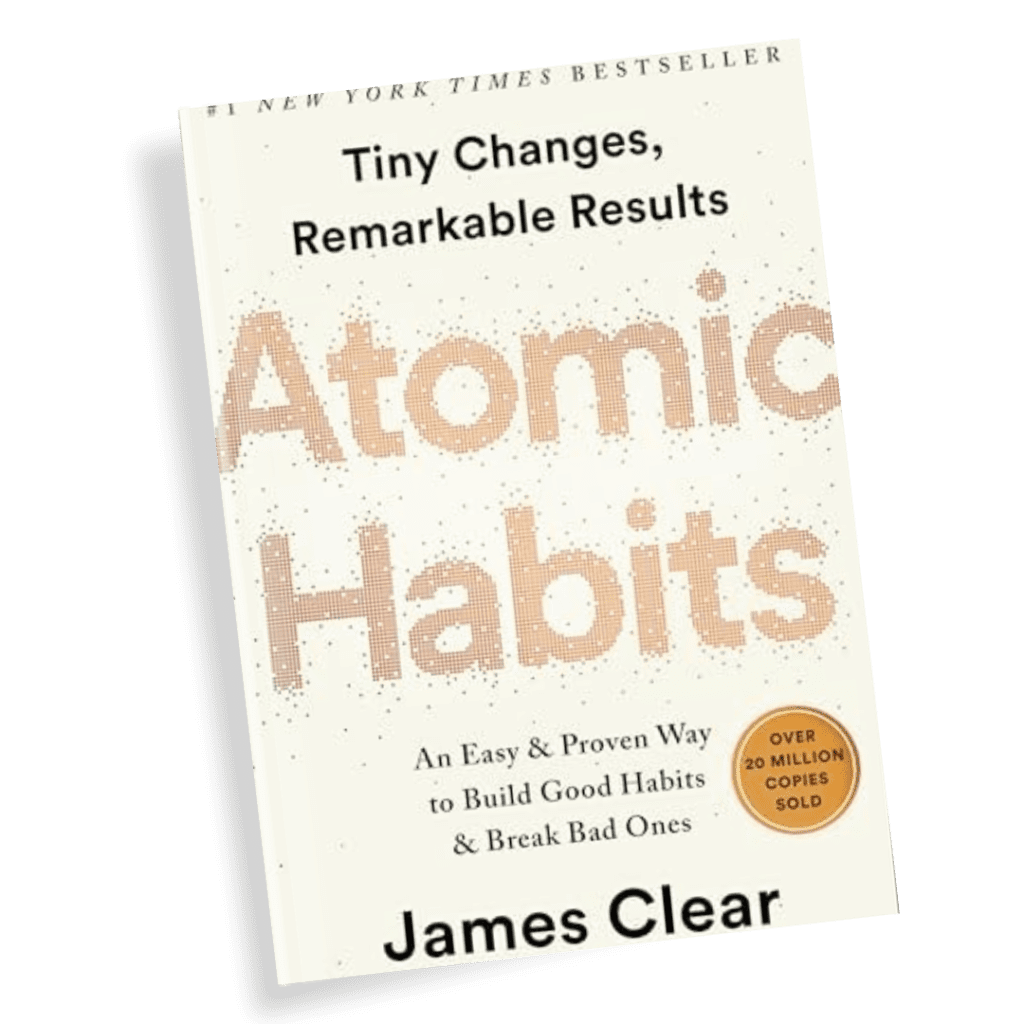
Atomic Habits: James Clear
Atomic Habits offers a proven framework for improving–every day. James Clear reveals practical strategies that will teach you exactly how to form good habits, break bad ones, and master the tiny behaviors that lead to remarkable results.