There is a particular kind of career crisis that doesn’t arrive with a dramatic resignation or a terrible boss. In fact, on paper, things might be going quite well. You’ve built experience, worked your way up, become good at what you do and reached some of the milestones that once felt important. Then, somewhere between another meeting, another Monday and another conversation about where you see yourself in five years, an inconvenient thought starts appearing: I don’t think I want to do this anymore.
It can be surprisingly difficult to admit when there is nothing obviously wrong. We tend to tell career-change stories from the point of crisis because they make sense that way. Someone was burnt out, miserable or completely disillusioned with their industry, so of course they left. Real life is often less tidy. You can like your colleagues and still want to go. You can be grateful for the career you’ve had while knowing it doesn’t fit the life you want next. You can even be extremely good at something and no longer want to do it.
For some people, that realisation leads to another company or an entirely different industry. For others, it eventually leads to entrepreneurship, sometimes without them ever having thought of themselves as particularly entrepreneurial in the first place.
Not every founder begins with a lifelong dream of running a company. Sometimes starting a business simply becomes the most logical way to create a job that doesn’t seem to exist anywhere else.
Start with the life before you start with the business
The obvious question when considering entrepreneurship is usually, “What business should I start?” It makes sense, but there is another question worth answering first: what do you actually want your working life to look like?
It is easy to focus on the visible parts of starting a business. The idea, the name, the website, the offer and eventually the announcement that makes the whole thing official. But underneath all of that is a collection of much more personal decisions about how you want to spend your time. Perhaps you want more control over your hours or the freedom to work remotely. Perhaps you love your profession but no longer want to work inside a large organisation. You might want to earn more, manage fewer people, travel, work around caring responsibilities or simply have greater control over the projects that occupy most of your week.
There isn’t one correct version of entrepreneurship, despite the fact that business culture sometimes makes it seem that way. A successful company doesn’t have to become a large company. You can build an agency with fifty employees, a consultancy with three, or a business deliberately designed around one person and a laptop. You can pursue aggressive growth or decide that enough is enough. The point is not to reproduce somebody else’s idea of a successful founder.
In fact, if you’re leaving a career because its structure no longer suits you, recreating exactly the same conditions inside your own company would be a slightly unfortunate outcome.
Before deciding what the business looks like, it is worth deciding what you want the business to make possible.
Your business idea might already be hiding in your career
Entrepreneurship has an enduring mythology around the Big Idea. Somewhere, a future founder spots a problem nobody else has noticed, scribbles a solution onto a napkin and proceeds to disrupt an industry. It is a compelling story. It is also not how plenty of perfectly good businesses begin.
Often the idea is much closer to home. It is the thing colleagues constantly ask for your help with, the problem you’ve solved dozens of times or the part of your job that seems straightforward to you because you’ve spent ten years learning how to do it. It might be knowledge of an industry, a particular technical skill or simply an ability to make something difficult feel much easier for other people.
A marketer becomes a consultant. Someone working in HR starts advising small businesses. A designer goes freelance and gradually builds a studio. A person who has spent years inside an industry notices the same problem appearing again and again and eventually wonders whether there might be a business in solving it.
Starting a business doesn’t necessarily mean throwing away your previous career. More often, it means rearranging what you already know into something you can own.
That distinction matters because career changes have a habit of making otherwise competent adults feel like complete beginners. There will certainly be things you don’t know, particularly if this is your first business, but you aren’t arriving empty-handed. Years spent working have already given you industry knowledge, relationships, judgement, communication skills and an understanding of how organisations and people actually behave. Even experience that seems completely unrelated has a habit of becoming useful later.
The new part is learning how to turn all of that into something somebody wants to buy.
The financial side deserves more than a vague plan
For anyone coming from salaried employment, starting a business changes your relationship with money surprisingly quickly. A salary largely happens in the background once you’ve negotiated it. Business revenue requires you to think about pricing, expenses, cash flow, tax, invoices and how much of the money arriving in your account actually belongs to you.
It is one of the less glamorous parts of entrepreneurship, but understanding your numbers before making a career change can make the difference between manageable uncertainty and constant panic. How much does your life cost each month? How much would the business need to generate for you to pay yourself? What new expenses will come with running it? How much breathing room would make the first year feel challenging rather than terrifying?
This doesn’t require an elaborate spreadsheet predicting revenue for the next decade. Early forecasts are guesses anyway, and businesses rarely behave exactly as their founders expected. What matters is understanding enough to make decisions grounded in your actual circumstances.
That might mean saving before you leave. It might mean keeping your job longer than you’d ideally like, reducing your hours or continuing freelance work while you build something else. There is no prize for making entrepreneurship unnecessarily difficult, and there is certainly no universal amount of risk that proves someone is serious about their business.
The ability to take risks is not distributed equally. Savings, mortgages, family responsibilities and countless other factors shape what a sensible transition looks like for each person. A good career change is not the most dramatic one. It is the one you can actually sustain.
Partnership Exit Strategy Example #3: Split the Business
Not every business can be neatly divided, but occasionally a partnership has naturally evolved into two businesses living under one roof.
Perhaps one founder runs the consulting side while the other has built a successful training division. They have different clients, different teams and increasingly different visions for where each part could go. For years, keeping everything together made financial and operational sense. Eventually, the structure starts creating more friction than value.
A potential exit strategy could involve separating the two parts into independent businesses. Each founder takes responsibility for the area they’ve already been leading, while advisers help determine how assets, intellectual property, employees, contracts and existing obligations should be divided.
There are obvious complexities here, and this isn’t something to organise casually over lunch. But where the business genuinely contains two distinct propositions, separation can give both sides room to grow without requiring either founder to abandon what they’ve spent years creating.
It’s also a useful reminder that an exit doesn’t always mean one person walks away while the other keeps everything. Sometimes the healthiest outcome is allowing one business to become two.
At some point, you need to stop preparing
There is, however, another trap waiting at the opposite end of all this sensible planning: spending months preparing to start a business without ever actually starting one.
This is remarkably easy to do because entrepreneurship comes with an endless supply of productive-looking distractions. You can research company names, buy domains, compare software, design elaborate systems, rewrite your About page fourteen times and spend an astonishing amount of energy deciding exactly which shade of green best represents your values.
Eventually, somebody needs to pay you.
The early stages of a business are less about having everything finished and more about getting close enough to real customers that they can start proving your assumptions wrong. Talk about what you’re doing. Speak to people who might need it. Make an offer. Put a price on it. Pay attention to what people understand immediately and what requires a ten-minute explanation.
Most businesses change once customers arrive because customers have an annoying habit of being real people rather than the imaginary ones in a business plan. They ask for things you hadn’t considered, value things you thought were insignificant and occasionally have no interest whatsoever in the feature you were convinced would change their lives.
This isn’t a failure of the original idea. It is how the idea becomes a business.
Entrepreneurship is a career change, not an escape from work
There is a version of entrepreneurship sold online that looks suspiciously unlike work. It involves freedom, laptops in attractive locations and the vague suggestion that becoming your own boss means nobody can tell you what to do anymore.
Your clients may have some thoughts on that.
Starting a business can give you enormous autonomy, but autonomy comes with responsibility attached. Nobody is setting the strategy for you anymore, but nobody is setting the strategy for you anymore. You get to choose your direction and then live with the consequences of choosing it.
For people who have spent years becoming specialists, this can be one of the biggest adjustments. You may have started a business because you’re excellent at design, finance, coaching, photography or consulting, only to discover that being a founder also requires some understanding of sales, marketing, operations, pricing, contracts and all the small administrative tasks that mysteriously reproduce overnight.
That doesn’t make entrepreneurship a bad career move. For many founders, learning those things becomes part of what makes the work interesting. It does mean that the decision deserves more thought than “I would like more freedom.”
The better question is whether you would like the particular kind of freedom that comes with being responsible for building the thing yourself.
Being your own boss doesn’t automatically mean having more freedom. It means learning how to build a business that supports the life you actually want. The 4-Hour Workweek explores ways to rethink work, create more flexibility and make better use of your time.
You don’t need to know what it becomes
One of the strange things about starting a business is how quickly people begin asking about the future. Will you hire? How big do you want it to become? Will you expand? Do you want to sell it eventually? What is the five-year plan?
These can be useful questions, but they can also create pressure to design a business for a future version of yourself you haven’t met yet.
Your first responsibility is not to know exactly what the company looks like in ten years. It is to learn enough to make the next decision well.
The business might grow. You might discover you love managing a team, despite being certain you wouldn’t. You might build something much larger than you imagined, or realise that your ideal business is deliberately small. The service you start with might disappear entirely once you discover what customers actually need from you.
That flexibility is part of the appeal.
Unlike moving from one predefined role into another, entrepreneurship gives you the unusual opportunity to shape the role as you go.
Maybe your next job doesn’t exist yet
A career change doesn’t always need to be a rejection of everything that came before it. Often, the most interesting changes happen when people take the useful pieces with them.
The knowledge. The relationships. The things they’ve become exceptionally good at. The mistakes they don’t want to repeat. The parts of previous jobs they loved and the parts they would quite happily never experience again.
Then they rearrange them.
Entrepreneurship is not the answer for everyone considering a career change, and nor should it be. There are brilliant jobs, terrible businesses and plenty of people who have no desire whatsoever to become responsible for their own payroll.
But for someone looking at the next stage of their career and repeatedly failing to find a role that looks quite right, there is another possibility worth considering.
Perhaps you don’t need to find the perfect next job.
Perhaps you need to build it.
Thinking about what comes next?
At Follow The Founder, we’re interested in the full reality of building a business, including the decisions that don’t fit neatly into the traditional success story. Because knowing how to begin matters, but knowing when and how to move into the next chapter can be just as important.
If you’re travelling abroad, Airalo makes it easy to stay connected with an eSIM without having to buy a physical SIM when you arrive.
If this conversation resonated, you’ll find more of it inside the Follow the Founder community.
We share honest conversations about leadership, brand building, AI, influence, and what it really takes to build something meaningful. No noise. No recycled advice. Just lived experience from founders who are in it.
Follow along, subscribe to our newsletter, and join the conversation. The future of founder content will not be automated. It will be intentional.
If you’re travelling abroad, Airalo makes it easy to stay connected with an eSIM without having to buy a physical SIM when you arrive.
Want to Keep Reading?
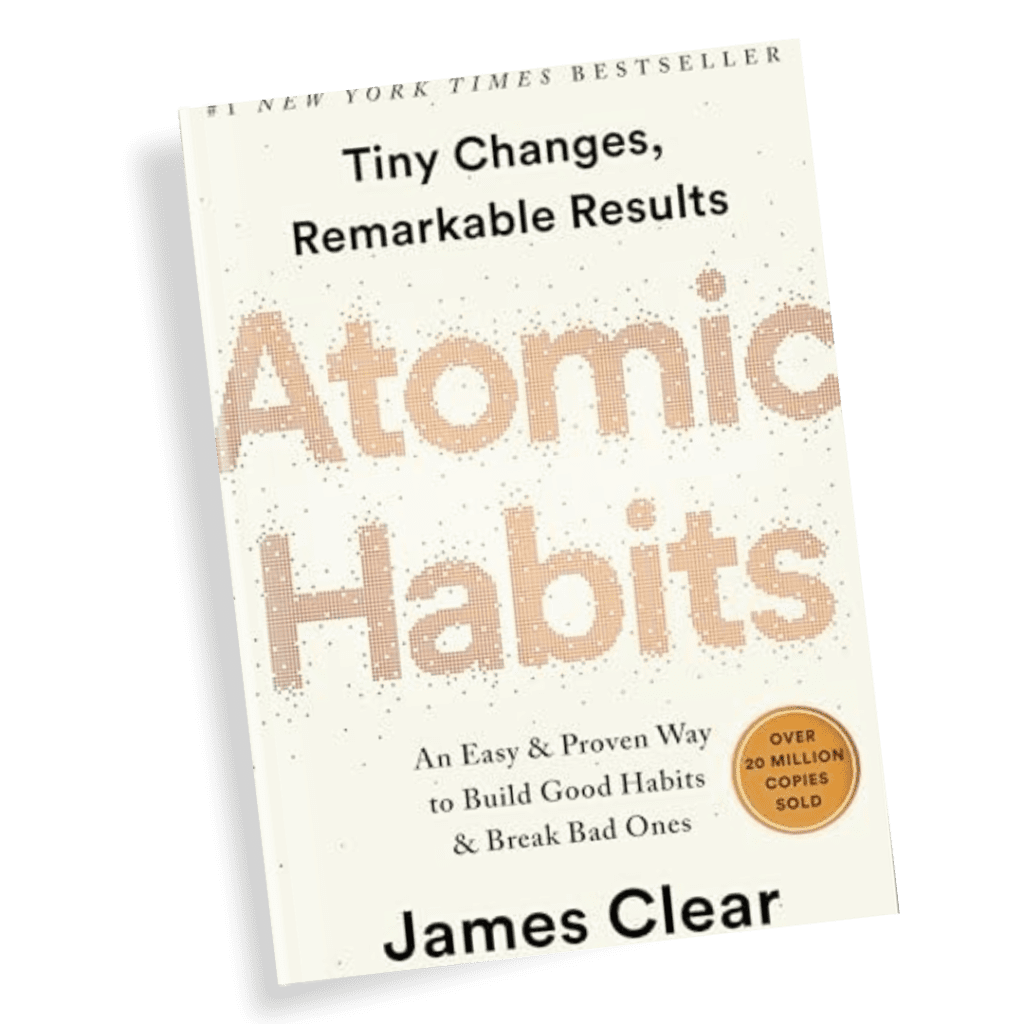
Atomic Habits: James Clear
Atomic Habits offers a proven framework for improving–every day. James Clear reveals practical strategies that will teach you exactly how to form good habits, break bad ones, and master the tiny behaviors that lead to remarkable results.