For a long time, ambition had a fairly recognisable shape. You wanted the promotion, the bigger salary, the better title and eventually the office with a door that closed. If you ran a business, the markers were slightly different but the direction was largely the same. More revenue. More clients. More employees. More locations. More growth.
The assumption underneath all of it was remarkably consistent: if things are going well, you should want more of them.
It is an idea that still sits at the centre of a lot of conversations about work. Ask someone about their career and we want to know what comes next. Ask a founder about their company and, before long, someone will ask how they plan to scale it. We rarely ask whether they actually want to.
But there is another version of ambition quietly becoming more visible. It isn’t necessarily smaller, easier or less serious. It simply measures progress differently. Instead of asking how much bigger something can become, people are beginning to ask what they want work to make possible in the first place.
Perhaps the future of ambition isn’t about wanting less.
Perhaps it’s about becoming much more specific about what we want more of.
We have made growth synonymous with success
Growth is wonderfully easy to measure, which is probably part of its appeal. Revenue goes up. Headcount increases. You open another location, enter another market or move into a larger office. There is evidence that things are progressing, and evidence is reassuring.
This is particularly pronounced in entrepreneurship, where the language of startups has seeped into the way we talk about almost every kind of business. We scale. We accelerate. We disrupt. We chase increasingly ambitious revenue targets and celebrate founders who turn small companies into enormous ones.
There is nothing inherently wrong with any of that. Building a large company can be an extraordinary achievement, and there are founders who genuinely love the challenge of growth. They want to manage hundreds of people, enter international markets, raise investment and see how far they can take an idea.
The strange part is that we’ve allowed one kind of ambition to become the default.
A founder can build a profitable company, employ a small team, pay everyone well and have no desire whatsoever to turn it into an empire. Yet there can still be an awkward sense that the business is waiting to become something bigger.
Even the phrase “lifestyle business” has occasionally been used with a faintly dismissive tone, as though designing a company to support the life you want is somehow less impressive than designing your life around the company.
When you put it like that, it is a slightly peculiar hierarchy.
Maybe “enough” deserves better PR
Business culture is very good at asking what comes next and surprisingly bad at asking when something is enough.
Enough revenue.
Enough clients.
Enough responsibility.
Enough hours spent working.
The difficulty is that there is always another number available. If you make $100,000, there is $200,000. If you have five employees, you could have ten. If you work with twenty clients, perhaps next year you should work with thirty.
Growth can become less of a decision and more of a reflex.
For founders, that reflex has consequences. More clients can require more people. More people require more management. More management requires more systems, meetings and responsibility. Somewhere along the way, the person who started a business because they loved designing, cooking, consulting, writing or making something can discover they spend most of their week approving leave requests and looking at cash-flow forecasts.
For some people, that’s exactly the evolution they want.
For others, it isn’t.
Knowing the difference early is surprisingly valuable.
There is a quiet confidence in being able to say, “This is enough for me.” Not because you’ve stopped caring or lost your ambition, but because you have decided what the business is for.
Ambition can point in more than one direction
Part of the problem is that we still tend to imagine ambition vertically.
You move upwards. Your title improves. Your company grows. Your income increases. Your influence expands.
But ambition can move sideways too.
You can want to become exceptionally good at something without wanting to manage anyone. You can want to work with fewer clients at a higher level. You can want to build a company that runs beautifully rather than one that grows quickly. You can want to make more money while working fewer hours, or earn roughly the same amount while having much more control over your time.
You can also be ambitious about things that have very little to do with work.
Living somewhere you’ve always wanted to live. Being present while your children are young. Having the time and energy to make dinner with friends on a Wednesday. Learning a language. Travelling slowly rather than squeezing life into two weeks of annual leave. Being able to close the laptop without mentally carrying work around for the rest of the evening.
These things don’t photograph particularly well beside a graph showing 300 per cent year-on-year growth.
They can still be signs of a successful life.
The dream job has changed
There was a time when the dream job was often imagined as a destination. Find work you love, ideally somewhere prestigious, become successful at it and you would never feel as though you were working again.
This was always a slightly suspicious promise.
Even wonderful jobs contain admin.
Perhaps a more useful ambition is not finding work so perfect that it becomes indistinguishable from leisure, but building a relationship with work that doesn’t require constantly recovering from it.
A job can be interesting and still leave room for the rest of your life. A business can matter deeply to you without becoming your entire personality. You can care about your work enormously and still want Fridays off.
For founders, this can require a conscious shift because businesses are extremely good at consuming whatever time you make available to them. There is always another email, another improvement, another opportunity or another problem that would benefit from your attention.
If the goal is simply “grow”, the work is effectively infinite.
If the goal is more specific, decisions become easier.
Perhaps you want to reach a certain level of revenue without increasing your hours. Perhaps you want to build a team capable of running the business while you take a month away. Perhaps you want Fridays completely free, or the ability to spend three months of the year somewhere else.
Suddenly success has boundaries.
And boundaries can be useful.
Flexibility is becoming its own status symbol
For years, professional status was often communicated through visible things. Titles, salaries, offices, business-class flights, impressive companies on a CV.
Increasingly, one of the most desirable things work can offer is much less visible: control.
Control over where you work. When you work. Who you work with. How much you work. The ability to say no without asking somebody else’s permission.
This is part of what draws many people towards entrepreneurship in the first place. It is not necessarily the fantasy of becoming enormously wealthy. Sometimes it is simply the possibility of having more ownership over their days.
Of course, entrepreneurship does not automatically provide that. Plenty of founders leave demanding jobs only to accidentally create an even more demanding boss in themselves. A business can provide freedom, but it can also happily take every hour you give it.
The important distinction is that founders have the opportunity to design for flexibility.
That might mean deliberately staying small. Building recurring revenue. Hiring earlier than feels comfortable. Creating systems that don’t require the founder to approve every decision. Turning down work that pays well but creates the wrong kind of business.
Those choices might slow one form of growth while creating another kind entirely.
Your definition of success is allowed to change
One of the more uncomfortable parts of getting older is discovering that some of the things you desperately wanted ten years ago are no longer particularly interesting.
The job title that once mattered might stop mattering. The business you wanted to build might turn out to be larger than the business you actually enjoy running. The salary that once represented success might eventually matter less than having control over your calendar.
That isn’t necessarily a loss of ambition.
It might be better information.
Our priorities change because our lives change. We gain responsibilities, experience and perspective. We learn what we’re good at, but we also learn what drains us. We discover that certain achievements feel wonderful for approximately three days before life continues exactly as it did before.
The danger comes when we keep pursuing an old definition of success simply because we announced it publicly at some point.
You are allowed to update the plan.
Founders pivot businesses constantly in response to new information. Perhaps we should give ourselves the same permission.
Build towards something, not away from everything
There is a reason fantasies about quitting work often involve beaches.
When people are exhausted, the opposite of work starts looking like the goal.
But most of us don’t actually want to spend the next forty years doing nothing. Work can provide creativity, connection, challenge, purpose, money and the deeply satisfying feeling of being good at something difficult.
The goal doesn’t have to be escaping work.
It can be building work that fits.
That might mean running a huge company. It might mean working for yourself. It might mean a four-day week inside an organisation you love, a portfolio career made up of several different things or a small business with no plans to become anything other than a very good small business.
The interesting part of the changing world of work is that we have more permission to decide.
Not unlimited permission. Money, family, health, geography and circumstance all place very real boundaries around the choices available to us. Work cannot always be designed exactly as we would like.
But where choices do exist, perhaps we should make them more deliberately.
Because ambition doesn’t have to mean sacrificing everything else in pursuit of more.
It can mean building something excellent and knowing when it is enough. It can mean becoming brilliant at your craft without becoming somebody’s manager. It can mean earning well and protecting your time. It can mean growing slowly, staying small or changing direction entirely.
The future of work might be less about climbing as high as possible and more about becoming clearer about where we actually want to go.
Maybe the ultimate ambition isn’t building a career you never want to leave.
Maybe it’s building one you don’t constantly need to escape from.
Thinking about what comes next?
At Follow The Founder, we’re interested in the full reality of building a business, including the decisions that don’t fit neatly into the traditional success story. Because knowing how to begin matters, but knowing when and how to move into the next chapter can be just as important.
If you’re looking for an inspiring read about building a career on your own terms, Girlboss on Amazon is worth adding to your reading list.
If this conversation resonated, you’ll find more of it inside the Follow the Founder community.
We share honest conversations about leadership, brand building, AI, influence, and what it really takes to build something meaningful. No noise. No recycled advice. Just lived experience from founders who are in it.
Follow along, subscribe to our newsletter, and join the conversation. The future of founder content will not be automated. It will be intentional.
If you’re travelling abroad, Airalo makes it easy to stay connected with an eSIM without having to buy a physical SIM when you arrive.
Want to Keep Reading?
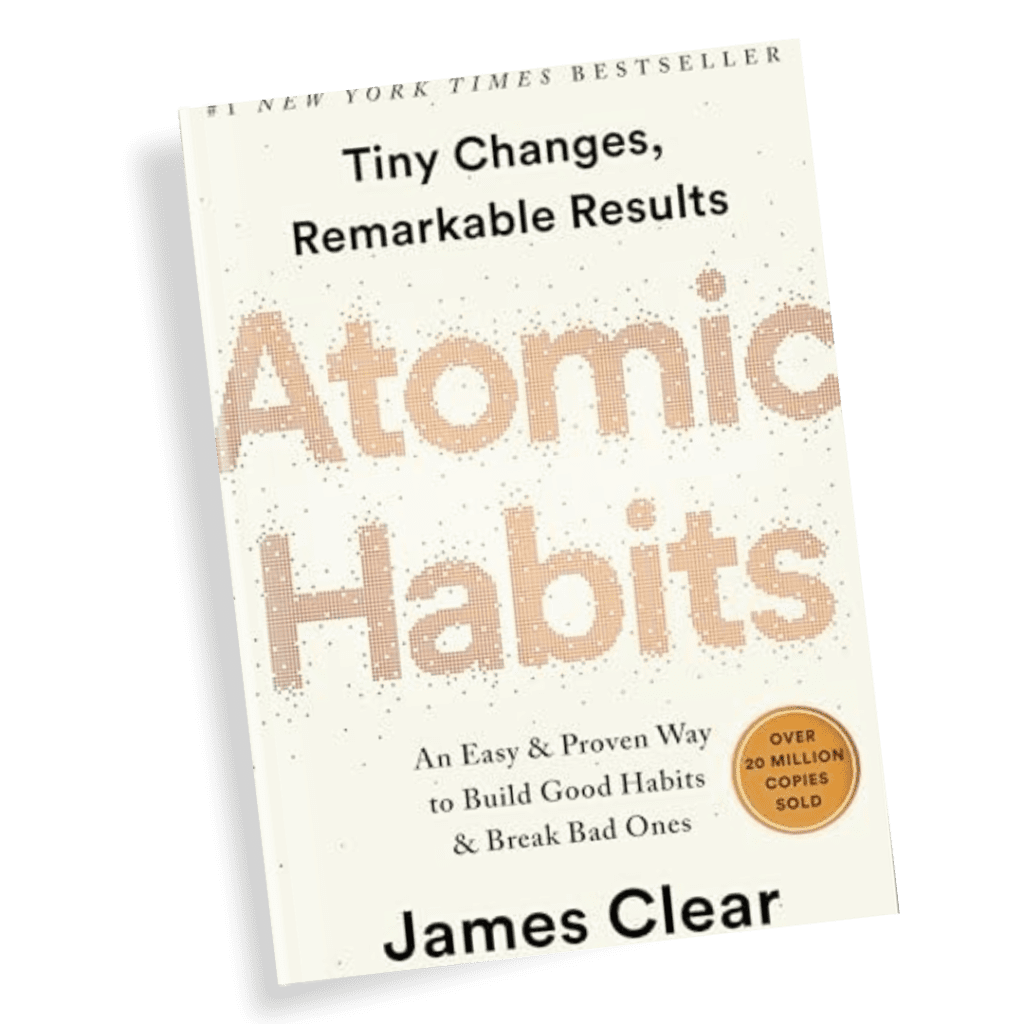
Atomic Habits: James Clear
Atomic Habits offers a proven framework for improving–every day. James Clear reveals practical strategies that will teach you exactly how to form good habits, break bad ones, and master the tiny behaviors that lead to remarkable results.