For a long time, we were sold a fairly straightforward version of working life. You chose a career, found a good company, worked hard, moved upwards and, if everything went according to plan, eventually retired with a respectable watch and a healthy dislike of Monday mornings.
It was never quite that simple, of course. Recessions happened. Companies folded. People were made redundant, industries disappeared and plenty of careers took unexpected turns. But there was still a prevailing idea that stability was something we should be working towards. Find the right job, build the right career, make sensible decisions and eventually you would arrive somewhere secure.
Today, that promise feels increasingly difficult to believe.
The world of work is shifting quickly. Businesses are restructuring, technology is changing what companies need from their teams, remote work has changed where we can work from, and the idea of spending decades with the same employer feels increasingly foreign. For founders, there is another layer entirely: clients come and go, markets shift, platforms change their rules, costs rise, services evolve and occasionally the thing you were absolutely certain would work simply… doesn’t.
It sounds unstable because it is.
But perhaps instability isn’t the opposite of a good working life. Perhaps we have simply spent too long confusing stability with certainty.
The stable career was always a little bit of a myth
There is something comforting about the traditional career ladder. You can see where you are standing, where you are supposed to go next and, importantly, what success is meant to look like when you get there.
The problem is that work has rarely behaved as neatly as the ladder suggests.
Even the careers we think of as conventional have always been vulnerable to things outside an individual’s control. Economies contract. Leadership changes. New technologies arrive. Companies merge. Entire sectors grow, shrink or reinvent themselves. Sometimes people do everything “right” and still find themselves looking for work on a Tuesday morning.
The difference now is perhaps that the cracks are harder to ignore.
We can see change happening in real time. A new technology launches and within months businesses are discussing how it might change their workforce. A pandemic turns millions of kitchen tables into offices almost overnight. A platform changes an algorithm and suddenly an entire group of small businesses has to rethink how it reaches customers.
The pace can feel dizzying. But there is also something useful about acknowledging it.
If stability was never entirely within our control, perhaps the goal shouldn’t be to construct a working life in which nothing changes. Maybe it should be to build one that can change with us.
Founders have always known this
Ask almost any founder what their business looks like today compared with the original plan and you are unlikely to get a straight line.
Businesses evolve because they have to. The service you thought would be your biggest seller isn’t. A client asks for something you’ve never offered before and suddenly it becomes half your business. You hire. You shrink. You change your pricing. You discover an audience you hadn’t considered. You realise something isn’t working and quietly retire the idea you once announced with enormous enthusiasm on Instagram.
None of this feels particularly unusual when you run a business. In fact, we have a much nicer word for it: pivoting.
We celebrate founders for adapting. We talk about resilience, experimentation and responding to the market. We admire businesses that notice the world changing and change with it.
Yet in our individual careers, we can be much less generous.
A role ending can feel like failure. Changing direction can feel like starting again. Not knowing what comes next can make us wonder whether everyone else received a map that somehow got lost in the post.
Perhaps there is something founders can teach the rest of the working world here. Not that uncertainty is always fun, because anyone who has stared at a quiet sales pipeline knows otherwise, but that changing direction doesn’t necessarily mean something has gone wrong.
Sometimes changing direction is the work.
What if adaptability is the new stability?
The word “stability” usually makes us think about permanence. A permanent job. A reliable salary. A company that will still need us five years from now.
But there is another way to think about it.
Stability could come from knowing you have skills that can travel with you. From relationships you’ve built across an industry. From understanding how to learn something new without having an existential crisis every time a piece of software updates. From knowing how you create value, even if the job title attached to that value changes.
It could come from trusting yourself.
That is a different kind of security because it isn’t dependent on one company, client, platform or role remaining exactly as it is today.
And importantly, adaptability doesn’t mean endlessly chasing whatever is new. Nobody needs to reinvent themselves every six months or become an early adopter of every shiny piece of technology that appears online. Sometimes adapting means recognising what shouldn’t change.
The strongest businesses often have a very clear sense of what they do well, while remaining flexible about how they deliver it. The same can be true of people. Your values, strengths and interests can remain remarkably consistent even as the shape of your work changes around them.
Instability creates room for experimentation
There is another side to a less rigid working world that can get lost when we talk about uncertainty: there are simply more ways to build a working life than there used to be.
The office is no longer the only obvious place to work. Employment isn’t the only way to build expertise. Starting a business doesn’t necessarily mean opening a shopfront, employing twenty people or betting your house on an idea.
Someone can work remotely from another country. A specialist can consult independently. A parent can build a business around school hours. A founder can intentionally keep a company small rather than pursuing endless growth. Someone can leave an industry, learn something new and begin again.
None of those options makes work automatically easy or accessible to everyone. Flexibility can come with its own costs, and the freedom to embrace uncertainty is not distributed equally. Financial responsibilities, visas, caring responsibilities, health, geography and countless other realities shape how much risk a person can reasonably take.
But the range of possibilities has expanded.
And when there is no longer one universally accepted version of what a successful career should look like, there is more space to ask a much more interesting question: what do I actually want mine to look like?
We might need to get better at not knowing
Founders are often asked where they see their business in five or ten years.
It is a perfectly reasonable question and an occasionally ridiculous one.
Most of us can barely predict what our industry will look like in three years, let alone ten. Some of the tools we will rely on haven’t been invented yet. Some of the companies dominating our industries won’t exist. New roles will emerge, others will shrink, and somewhere a teenager is currently building something in their bedroom that will make an entire sector collectively say, “Oh. Right.”
Planning still matters. Ambition matters. Having somewhere you want to go is useful.
But perhaps we can loosen our grip on the idea that success requires predicting the destination perfectly.
There is a particular confidence in being able to say: I don’t know exactly what this will look like yet, but I know what matters to me. I know what I’m good at. I know what I want to learn. And I trust myself to respond when the landscape changes.
That isn’t a lack of direction.
It might be a much more realistic way of navigating work.
The future is unfinished
There are genuine reasons to feel uncertain about the future of work. Change creates winners and losers. New technology can create opportunities while disrupting livelihoods. Flexible work can be liberating for one person and precarious for another. There is no point pretending every change is progress simply because it is new.
But uncertainty also means the future hasn’t been decided yet.
We are still negotiating what a workplace should look like. We are still deciding how much of our lives work deserves. We are questioning whether growth is always the goal, whether an office is always necessary, whether a career needs to move upwards to move forward, and whether the way previous generations worked automatically makes sense for ours.
For founders especially, that unfinished quality is familiar territory.
Building something means operating without all the answers. You make the best decision you can with the information you have, learn from what happens next and adjust. Sometimes you get it spectacularly wrong. Sometimes the unexpected route turns out to be far more interesting than the one you originally planned.
So yes, the future of work is unstable.
But unstable doesn’t have to mean directionless or doomed. It can also mean flexible. Unfinished. Open to negotiation. Capable of becoming something different.
Perhaps the goal isn’t to find the one job, business or career that makes us permanently secure.
Perhaps it’s to build enough confidence in ourselves that when work inevitably changes, we know we can change with it.
Thinking about what comes next?
At Follow The Founder, we’re interested in the full reality of building a business, including the decisions that don’t fit neatly into the traditional success story. Because knowing how to begin matters, but knowing when and how to move into the next chapter can be just as important.
For frequent travellers, having mobile data ready when you land can make things much easier. Airalo is one simple option for staying connected abroad.
If this conversation resonated, you’ll find more of it inside the Follow the Founder community.
We share honest conversations about leadership, brand building, AI, influence, and what it really takes to build something meaningful. No noise. No recycled advice. Just lived experience from founders who are in it.
Follow along, subscribe to our newsletter, and join the conversation. The future of founder content will not be automated. It will be intentional.
If you’re travelling abroad, Airalo makes it easy to stay connected with an eSIM without having to buy a physical SIM when you arrive.
Want to Keep Reading?
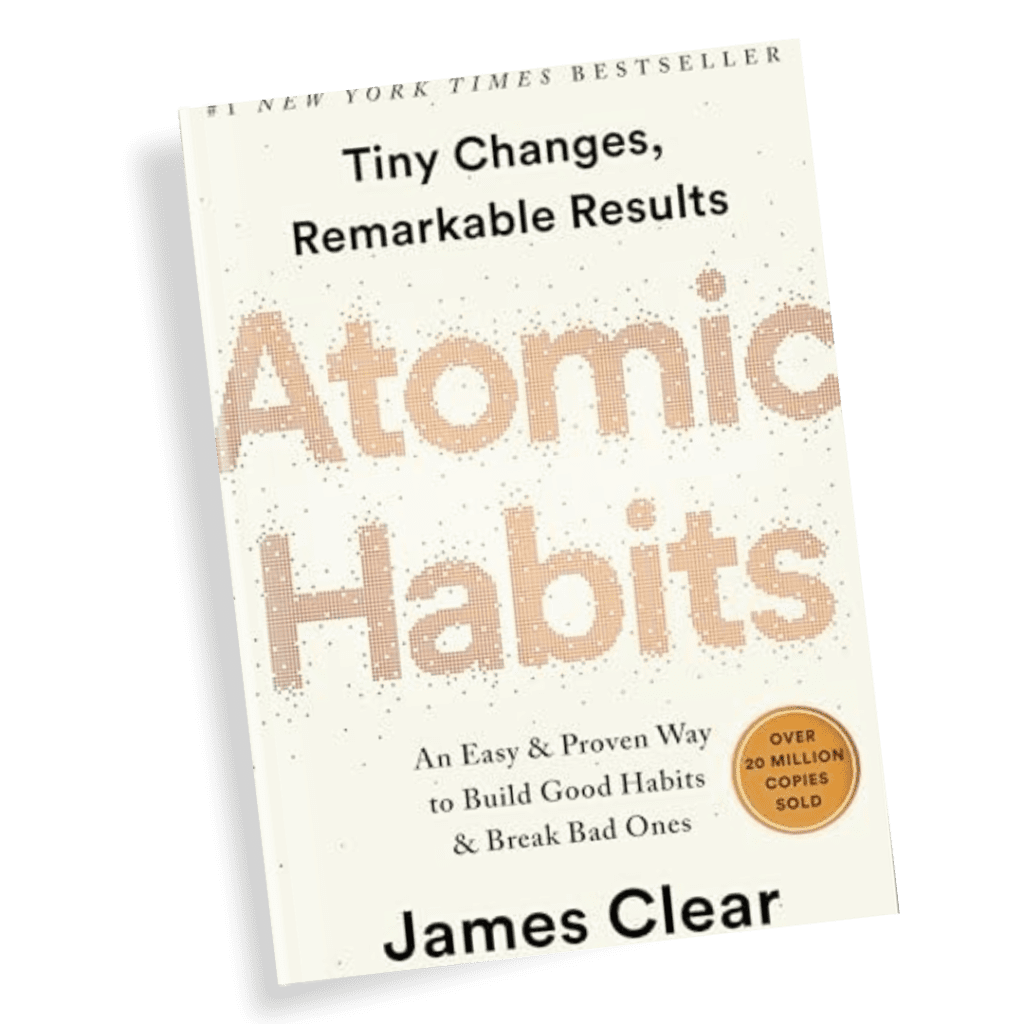
Atomic Habits: James Clear
Atomic Habits offers a proven framework for improving–every day. James Clear reveals practical strategies that will teach you exactly how to form good habits, break bad ones, and master the tiny behaviors that lead to remarkable results.