There is a slightly exhausting conversation happening about the future of work.
It usually begins with artificial intelligence, moves quickly to which jobs are going to disappear and ends somewhere around the point where we’re all either unemployed or working two-hour weeks while robots handle the admin.
Depending on who you ask, technology is coming for our jobs, saving us from our jobs or fundamentally changing the concept of work altogether. The reality will probably be considerably messier.
Technology has always changed what we do for work. It removes certain tasks, speeds others up and creates entirely new categories of work in the process. What feels different about this particular moment is how quickly the tools are moving into areas we once thought of as distinctly human: writing, design, analysis, coding, research and creative work.
For founders and small businesses, this isn’t a distant conversation about the workplace of 2040. It’s already here.
We can automate emails, summarise meetings, generate first drafts, analyse data, answer customer questions and create things in minutes that once took hours.
Which raises a much more interesting question than whether machines can do our jobs. If technology can do more of the work, what becomes more valuable for humans to do?
Being able to make something is no longer the whole skill
For a long time, technical ability created a useful barrier to entry.
If you wanted a website, you needed someone who knew how to build one. If you wanted professional photography, you needed someone who understood a camera. If you wanted to analyse thousands of pieces of information, you needed the tools, knowledge and time required to do it.
Those barriers haven’t disappeared, but many are getting lower. It is becoming remarkably easy to produce something. Producing something good is another question entirely.
Give ten people exactly the same technology and you will still get ten very different results. The difference isn’t necessarily who understands the tool best. It is who knows what to ask for, what to keep, what to throw away and when something technically correct still isn’t quite right.
In other words, the value begins moving away from pure execution and towards judgement. That is a fascinating shift.
Because judgement is difficult to automate. It is built slowly from experience, context, mistakes, observation and knowing enough about something to recognise when the obvious answer isn’t necessarily the best one.
The tool might give you 100 ideas. The skill is knowing which one deserves to exist.
Taste is becoming a business skill
Taste can sound frivolous in a business context. It makes you think of fonts, clothes or whether someone has an unusually strong opinion about restaurant lighting.
But taste is really discernment. It is the ability to look at a sea of perfectly acceptable options and recognise the one that feels right. Founders use taste constantly, whether they call it that or not.
Which product should we build? Which customer should we listen to? Which opportunity is worth pursuing? Does this campaign feel like us? Is this idea clever or merely complicated? Is this person right for the team? Is this technically fine but somehow completely wrong?
More technology means more options. More content. More ideas. More data. More things that can be created quickly and cheaply.
That makes filtering increasingly important. The scarce resource may no longer be the ability to generate. It may be the ability to choose.
Efficiency is useful. Sameness isn’t.
There is an obvious appeal to automation for anyone running a business.
Most founders have a list of repetitive tasks they would happily hand over to a machine without so much as a farewell party. If technology can reduce the hours spent moving information between systems, formatting documents, taking notes or staring at spreadsheets, wonderful.
Nobody started a company because they had a lifelong passion for copying data from one box into another. But efficiency has an interesting side effect.
When everyone has access to similar tools, it becomes easier for everyone to produce similar work.
You can already see this in corners of the internet. The same phrases. The same structures. The same polished language. The same vaguely inspirational business advice delivered in a slightly different shade of beige.
Everything is competent. Very little is memorable. That creates an opportunity. As generic work becomes easier to produce, specificity becomes more valuable. Having an opinion becomes more valuable. A recognisable voice becomes more valuable.
Knowing your customer well enough to say something that could only have come from your business becomes more valuable.
The irony is that the easier technology makes it to sound professional, the less interesting “professional” on its own becomes.
People still want to deal with people
Business has never been purely transactional.
We choose accountants, designers, hairdressers, consultants, cafés, agencies and countless other businesses for reasons that aren’t easily captured in a feature list. We like them. We trust them. They understand us.
They remember something from the last conversation. They know when to push back. They explain something complicated without making us feel stupid. They can tell when what we’re asking for isn’t actually what we need.
That relationship can be difficult to quantify, but anyone who has built a business through referrals knows how valuable it is.
Technology can support those relationships brilliantly. It can remove administrative work, surface useful information and give people more time to focus on the parts of their job that require attention.
But efficiency isn’t the same thing as trust. Trust is accumulated through interactions.
It comes from doing what you said you would do. From admitting when you don’t know something. From understanding context. From making a judgement call when there isn’t a perfect answer.
Those aren’t particularly flashy skills. They may become some of the most important ones we have.
Creativity was never only about producing things
The arrival of generative technology has understandably made creative industries nervous.
If software can generate an image, write copy, create music or produce a design in seconds, what happens to the people who spent years learning to do those things?
It is a real question. But it also exposes something we have perhaps misunderstood about creative work. Creativity isn’t simply producing an output.
A designer isn’t valuable because they know where the buttons are in design software. A writer isn’t valuable because they can physically arrange words into sentences. A photographer isn’t valuable because they can press a shutter. The craft matters enormously, but the craft is in service of something else.
Understanding what you’re trying to communicate. Recognising what hasn’t been said. Finding an unexpected connection. Knowing which rule to break. Asking a better question. Developing an idea that feels specific to a particular audience, moment or problem.
Creative people have always used tools. The tools are changing. The thinking still matters.
Founders may need to become better editors
There is a running joke in business that founders have to do everything.
In the early days, that can be painfully literal. You are strategy, sales, marketing, customer service, operations and whoever is responsible for remembering the password to the Instagram account.
Technology can take some of that weight away. But the founder’s role may increasingly become less about personally creating every piece of work and more about directing, editing and deciding.
- What are we actually trying to achieve?
- What should we automate and what deserves a human?
- Where does speed matter?
- Where would slowing down produce something better?
- What sounds like us?
What should never be outsourced because it sits too close to the reason the business exists? These are not technology questions. They are leadership questions. And they become more important, not less, when creating things becomes easier.
There is a difference between possible and worthwhile
Technology has a habit of making us ask, “Can we?”
- Can we automate this conversation?
- Can we generate this content?
- Can we replace this process?
- Can we do this in five minutes instead of five hours?
Sometimes the answer is yes. The more useful question might be whether we should.
Not because using technology is inherently bad or because doing things manually is somehow morally superior. Most of us have better things to do than preserve inefficient processes for nostalgia’s sake.
But speed isn’t the only measure of good work. Sometimes the conversation is the valuable part. Sometimes spending time thinking is the work. Sometimes a customer wants to feel heard rather than efficiently processed. Sometimes the unexpected idea appears because two people talked for an hour and wandered completely off topic.
Businesses need efficiency. They also need space for things that aren’t immediately efficient.
Perhaps the future isn’t human versus machine
We have a tendency to frame technological change as a competition.
Human versus machine. Original versus generated. Old way versus new way. But most founders are unlikely to experience the future of work in such clean categories. We will use technology constantly. We already do.
It will become embedded in tools until we stop thinking of much of it as artificial intelligence at all. Some tasks will become quicker. Some roles will change. Some skills that once commanded a premium may become easier to access, while others become more valuable.
The interesting part is deciding what we do with the time and capacity that creates.
If technology gives a founder five hours back, do those hours simply become five more hours of output?
Or could they become time spent talking to customers, thinking about the business, developing ideas, mentoring a team, building relationships or occasionally closing the laptop before dinner? Efficiency is only useful if we decide what it is for.
The future of work might be surprisingly human
Nobody can say with certainty exactly how technology will reshape work over the next decade.
There will be disruption. There will be opportunities. There will almost certainly be jobs and businesses we haven’t thought of yet, alongside tasks we currently spend hours doing that future workers will find slightly ridiculous.
But perhaps the rise of increasingly capable technology doesn’t make human qualities less relevant.
Perhaps it makes them easier to see. Judgement. Curiosity. Taste. Empathy. Context. Trust. Creativity. Communication. The ability to listen properly. The confidence to disagree. The experience to know when the obvious answer isn’t the right one.
These aren’t consolation prizes left over after technology takes the interesting work. They are the things that make work interesting in the first place.
The future of work will undoubtedly involve more technology. But the businesses and careers that stand out may be the ones that become better at deciding where the technology ends and the human begins.
As technology continues to change how we work, the value of human connection remains. The Human Network explores how our relationships shape the way we live, work and build meaningful connections with others.
Thinking about what comes next?
At Follow The Founder, we’re interested in the full reality of building a business, including the decisions that don’t fit neatly into the traditional success story. Because knowing how to begin matters, but knowing when and how to move into the next chapter can be just as important.
If you’re interested in personal growth alongside your professional journey, Confident & Killing It on Amazon is one book worth checking out.
If this conversation resonated, you’ll find more of it inside the Follow the Founder community.
We share honest conversations about leadership, brand building, AI, influence, and what it really takes to build something meaningful. No noise. No recycled advice. Just lived experience from founders who are in it.
Follow along, subscribe to our newsletter, and join the conversation. The future of founder content will not be automated. It will be intentional.
If you’re travelling abroad, Airalo makes it easy to stay connected with an eSIM without having to buy a physical SIM when you arrive.
Want to Keep Reading?
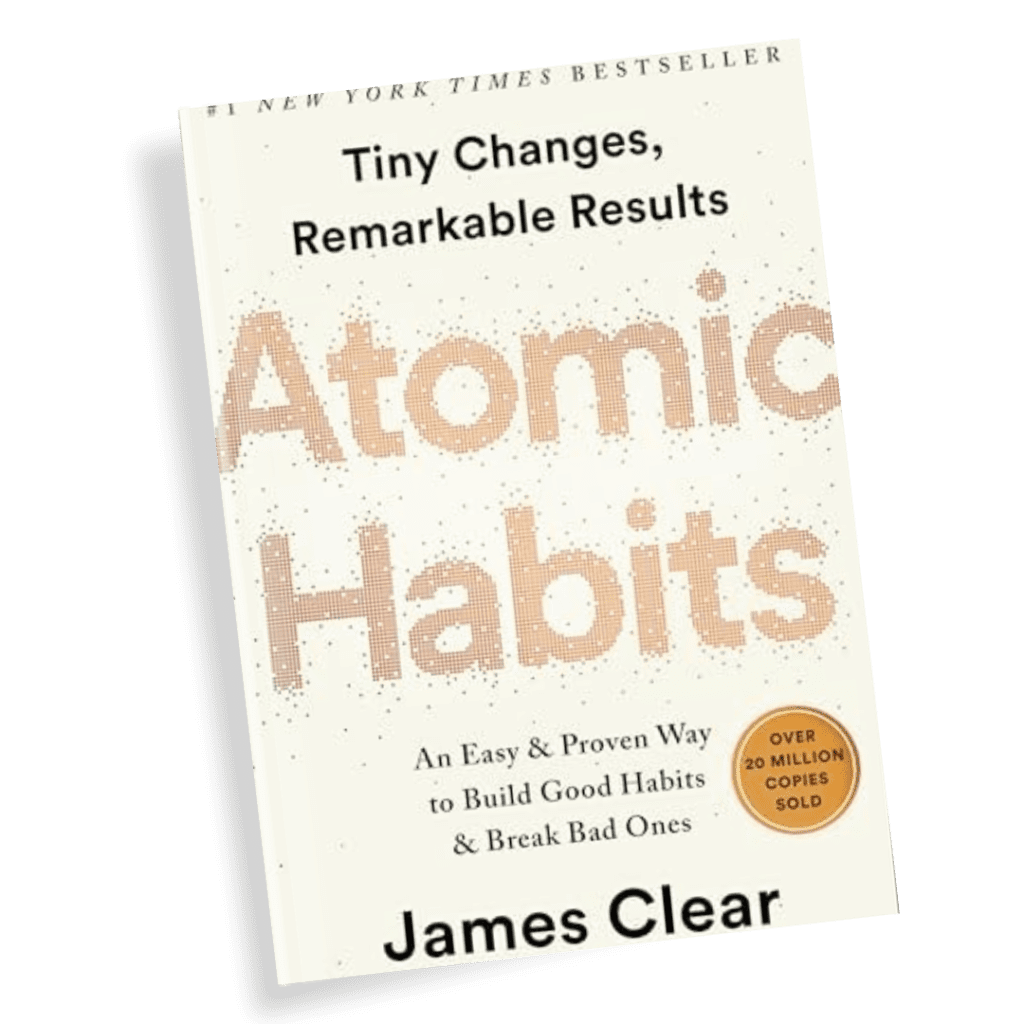
Atomic Habits: James Clear
Atomic Habits offers a proven framework for improving–every day. James Clear reveals practical strategies that will teach you exactly how to form good habits, break bad ones, and master the tiny behaviors that lead to remarkable results.