We talk a lot about how business partnerships begin. There are stories about two friends having an idea over dinner, former colleagues spotting an opportunity or people with completely different skills realising they could build something better together. We celebrate the early days, the complementary personalities and the slightly romantic idea of finding someone willing to take the enormous leap of building a company alongside you. What we talk about considerably less is what happens when a partnership has worked, perhaps incredibly well, and then reaches the end of its natural life.
Ending a business partnership is often framed as evidence that something went wrong. We assume there must have been an argument, a betrayal, an irreparable disagreement or at least one spectacularly uncomfortable meeting involving lawyers. Sometimes, of course, there is. But partnerships can also end for much quieter and healthier reasons. People change, priorities evolve and two founders who were perfectly aligned when they started a company at 30 may discover at 40 that they’re imagining very different versions of what they want their lives and careers to look like.
That doesn’t make the partnership a failure. In fact, knowing when something has run its course can be one of the most thoughtful decisions founders make. A business relationship doesn’t need to last forever to have been successful. Sometimes its success is precisely what gives both people the opportunity to choose what comes next.
You Can Be Grateful for Something and Still Be Ready to Leave It
There’s a strange assumption that leaving something means we must no longer value it. We see it in careers, relationships, cities and businesses. If someone decides to move on, we instinctively search for the problem that made them leave. Yet some of life’s biggest transitions don’t happen because the old thing became terrible. They happen because the person living inside it changed.
Business partnerships are particularly vulnerable to this because they’re often built during incredibly formative periods of people’s lives. Two founders might spend years making decisions together, surviving difficult launches, celebrating extraordinary wins and navigating the kind of financial uncertainty that creates a bond few people outside the business fully understand. They’ve probably seen one another stressed, exhausted, euphoric and occasionally losing their minds over something that seemed perfectly manageable three days earlier. That history matters, even if eventually their paths begin moving in different directions.
One founder might want to scale aggressively while the other wants a smaller, more flexible company. One might be energised by the business after ten years while the other feels increasingly curious about something new. Personal circumstances change too. Children arrive, parents age, people move countries, health becomes more important and the amount of energy we’re willing to give work evolves. None of these changes require a villain.
There can be enormous maturity in looking at something you’ve built together and saying, This was right for us then. I’m not sure it’s right for both of us now.
The Hardest Part Might Be Admitting You Want Different Things
When you start a company together, alignment can feel almost effortless. You’re both focused on getting the first clients, making enough money to keep going and proving that the idea actually works. The destination is close enough that everyone can see it. Growth introduces more choices, and choices reveal differences that simply weren’t relevant at the beginning.
What should the company become? How large should it get? Do you want investors? Do you want employees? Should you sell? Do you want to work sixty hours a week for the next five years if it could dramatically increase the value of the business? Would you rather earn less and have Fridays free? Suddenly, questions that sound like business strategy are also questions about values, identity and what each person wants their actual life to look like.
Neither answer has to be wrong. That’s what can make these conversations so difficult. It’s considerably easier to leave when someone has behaved badly than when you’re sitting across from a person you respect and realising you simply want different things.
Founders can spend years trying to negotiate around that truth. They restructure roles, divide responsibilities and convince themselves the tension will disappear after the next stage of growth. Sometimes those adjustments genuinely work. Other times they simply postpone a conversation both people already know they need to have.
Recognising a difference doesn’t mean immediately dissolving a partnership. It does mean giving both people permission to talk honestly about what they want without treating different ambitions as disloyalty.
A Good Ending Can Protect the Relationship
We often wait far too long to end things because we’re frightened of what ending them might destroy. Ironically, staying can sometimes do considerably more damage.
Small frustrations become resentment. Conversations that were once easy become loaded. Decisions take longer because every discussion carries the weight of several previous disagreements. People begin interpreting ordinary behaviour through the lens of unresolved tension, and eventually the friendship or professional respect that made the partnership work in the first place starts disappearing underneath it.
A thoughtful separation can interrupt that process.
That doesn’t mean it will be painless. Businesses involve money, identity, responsibility and years of shared history, and untangling those things deserves care. There may be uncomfortable conversations about ownership, clients, staff, intellectual property and what happens next. Good professional advice matters enormously here, particularly when agreements were written years earlier for two people who couldn’t possibly have anticipated the situation they’re now navigating.
But practical complexity and personal hostility aren’t the same thing. Founders can disagree about valuation without deciding the other person is terrible. They can negotiate firmly while still respecting what they created together. They can acknowledge disappointment without rewriting the entire history of the partnership as a mistake.
Sometimes the kindest thing two business partners can do for their relationship is stop asking it to carry a business it no longer needs to carry.
The Business Might Be Better for It Too
There’s another reason ending a partnership can be positive that founders sometimes feel uncomfortable admitting: the business itself may benefit.
When two leaders fundamentally disagree about direction, companies can become stuck in a strange state of permanent compromise. Nobody gets the business they actually want because every major decision has to land somewhere in the middle. Strategy becomes slower, teams receive mixed signals and opportunities disappear while the founders continue debating what kind of company they’re trying to build.
A separation can create clarity. One person may take ownership and finally pursue the direction they believe in. The other may leave with the freedom, capital or confidence to build something completely different. A business that felt stagnant can suddenly have momentum again, while the departing founder discovers that the idea they’ve been quietly thinking about for three years deserves their full attention.
There is no universal version of what a successful separation looks like. Sometimes one founder buys the other out. Sometimes the company is sold. Sometimes responsibilities are divided or businesses split into separate entities. Occasionally both people decide the company itself has reached its natural conclusion and close it together. What matters is less about the mechanics and more about whether the outcome creates a healthier future than continuing purely because ending feels uncomfortable.
You Don’t Have to Rewrite the Story
Perhaps one of the saddest things about difficult business separations is how quickly people begin rewriting history. Years of collaboration suddenly become years of frustration. Good decisions become mistakes. Memories that once made people proud are reinterpreted through the emotions of the ending.
They don’t have to be.
A partnership can have been exactly right for eight years and wrong in year nine. Someone can have been instrumental in helping you build a company and still no longer be the person you should build its next chapter with. You can appreciate what someone contributed without needing to remain professionally connected forever.
There is something deeply freeing about allowing two truths to exist at once. We built something wonderful together. And, We’re ready to build separately now.
Founders are often comfortable with evolution when it applies to products, markets and strategy. We expect companies to pivot when circumstances change. We change branding, restructure teams, retire services and abandon ideas that once seemed essential. Yet when it comes to relationships, we can become strangely attached to permanence as proof that something worked.
Perhaps partnerships deserve the same permission to evolve.
What Comes Next Can Be Exciting
One of the reasons endings feel frightening is that we’re naturally focused on what we’re losing. The familiar decision-making structure disappears. Responsibilities change. There may suddenly be nobody sitting beside you who remembers exactly how terrifying the first year was or understands why a particular client still makes you slightly nervous when their name appears in your inbox.
But space is also being created.
For the founder staying with the company, that might mean finally having the freedom to shape it around a clearer vision. For the founder leaving, it might mean discovering who they are professionally outside a partnership that has defined them for years. There may be another company ahead, a completely different career, a period of consulting, travel, study or simply enough breathing room to decide without immediately rushing into the next thing.
That possibility deserves more attention when we talk about business endings. Founders are incredibly good at imagining opportunity when they’re starting something and surprisingly bad at remembering that the same possibility exists when something ends.
The skills don’t disappear. The relationships don’t disappear. The experience certainly doesn’t disappear. If anything, both founders leave the partnership knowing considerably more about themselves, business and leadership than they did when they entered it.
They aren’t going back to the beginning.
They’re starting the next thing with everything the partnership taught them.
Final Thoughts
Not every successful business partnership needs a fifty-year anniversary.
Some partnerships exist to build one extraordinary chapter. They bring together the right people at the right moment, create opportunities neither could have created alone and teach both founders things that shape everything they do afterwards. If that partnership eventually ends, its value doesn’t disappear with it.
There is courage in building something together, but there can also be courage in recognising when it’s time to build separately. Doing that well requires honesty, generosity and enough perspective to understand that changing direction doesn’t automatically invalidate where you’ve been.
The best business endings aren’t necessarily the ones where everyone walks away delighted. Real transitions are rarely that neat. They’re the ones where people can eventually look back and recognise that something important was created, something meaningful was learned and, when the time came, both people were given the freedom to move forward.
Sometimes that’s not the failure of a partnership.
It’s the final thing the partnership gets right.
Ready for your next chapter?
At Follow The Founder, we believe founder stories are about far more than how businesses begin. They’re also about how people grow, change direction and make difficult decisions about what comes next. Because sometimes moving forward means recognising that something can have been wonderful without needing to last forever.
Looking to add a few new ideas to your reading list? Browse business books on Amazon for books covering entrepreneurship, leadership, productivity and more.
If this conversation resonated, you’ll find more of it inside the Follow the Founder community.
We share honest conversations about leadership, brand building, AI, influence, and what it really takes to build something meaningful. No noise. No recycled advice. Just lived experience from founders who are in it.
Follow along, subscribe to our newsletter, and join the conversation. The future of founder content will not be automated. It will be intentional.
If you’re travelling abroad, Airalo makes it easy to stay connected with an eSIM without having to buy a physical SIM when you arrive.
Want to Keep Reading?
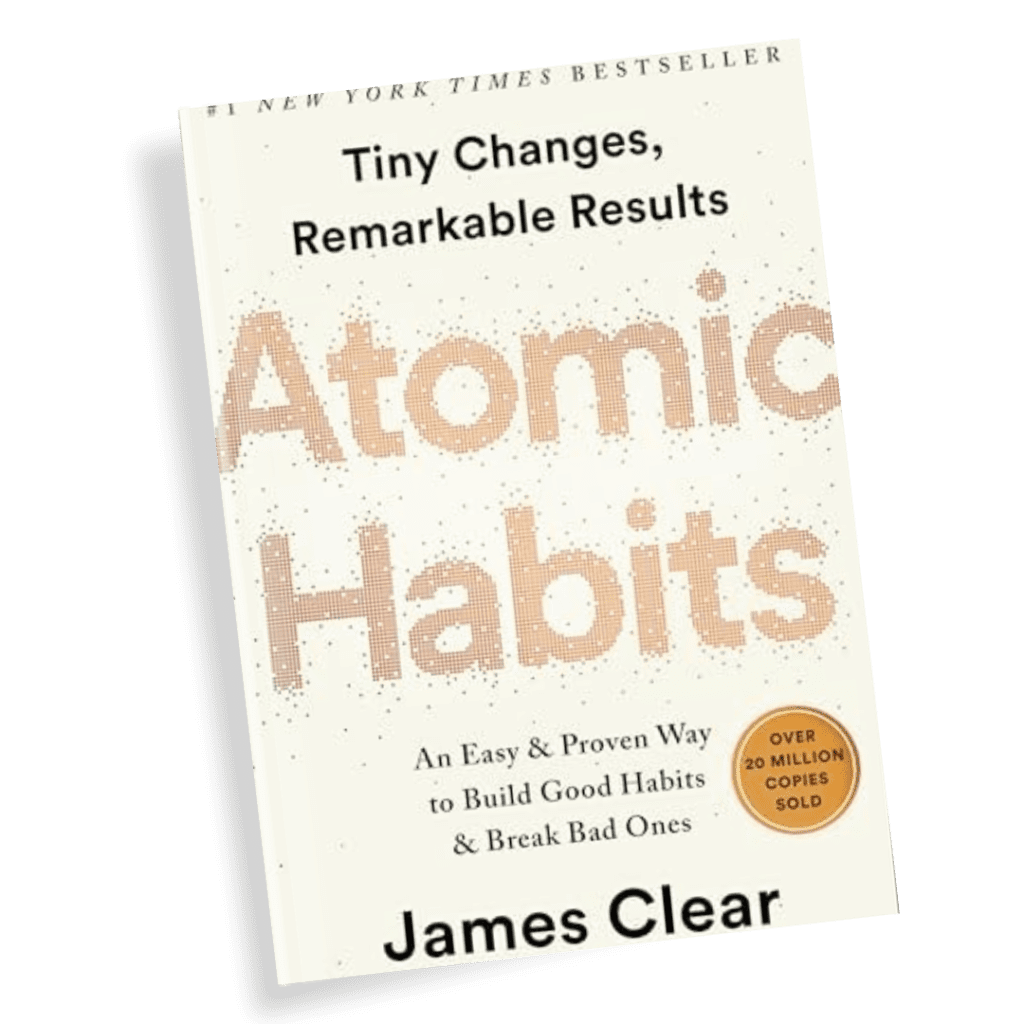
Atomic Habits: James Clear
Atomic Habits offers a proven framework for improving–every day. James Clear reveals practical strategies that will teach you exactly how to form good habits, break bad ones, and master the tiny behaviors that lead to remarkable results.