There was once a fairly simple way to explain a successful career.
You started somewhere near the bottom, worked hard, collected a few promotions, moved into management and continued steadily upwards until you reached whatever version of the top you had been aiming for. Ideally, each new job title sounded slightly more impressive than the last. Your salary went up. Your responsibilities grew. Your LinkedIn profile told a coherent story.
It was a ladder. And the important thing about ladders is that there is really only one respectable direction to travel. Up.
Except increasingly, that isn’t how careers actually look.
People leave senior roles to start businesses. Founders close businesses and return to employment. Employees become freelancers, freelancers become consultants, consultants build agencies and agency owners decide they would actually quite like to work by themselves again. Someone spends ten years becoming an expert in one industry and then discovers they want absolutely nothing to do with it.
Careers pause. They restart. They overlap. They move sideways. Sometimes they go backwards financially and dramatically forwards personally.
On paper, it can look a little messy. In real life, it might simply be what a modern career looks like.
We still love a neat story
Humans like narratives that make sense in retrospect.
It is why founder stories so often get compressed into something wonderfully tidy. Someone spots a problem, has an idea, takes a risk and builds a successful company. Three sentences, beginning to end.
The years of uncertainty, strange freelance jobs, failed ideas, financial panic, accidental opportunities and periods of having absolutely no idea what they were doing tend to get edited out. We do something similar with careers.
Look at almost anyone with an interesting working life and there is a temptation to connect the dots backwards, as though every move was part of an elaborate plan. That random job taught them this. That redundancy led them there. That side project was obviously the beginning of the company they run today.
Sometimes that’s true. Sometimes you took the job because you needed rent money.
The pressure to make our careers look intentional can be surprisingly strong. We want the CV to make sense. We want the explanation at dinner parties to be easy. We want every move to look like progress.
But perhaps we’ve become too attached to the idea that progress should be obvious while we’re living through it.
Moving sideways can still move you forward
A promotion is easy to understand as progress because somebody has essentially stamped it for you.
Congratulations. You have moved up one square. Other kinds of progress are harder to measure.
Taking a lower-paid role in an industry you want to enter might look like a step backwards. Leaving a large company for a tiny startup might mean losing the impressive job title. Going freelance can turn a perfectly respectable career trajectory into a collection of projects that suddenly requires several sentences to explain.
Starting a business can be even stranger.
One day you are a senior designer, marketing director, accountant or engineer. The next you are the founder, salesperson, customer service department, bookkeeper and person Googling why the printer has suddenly stopped connecting to the Wi-Fi.
Technically, you’ve been promoted to CEO. Practically, you’re unclogging the office sink. But those sideways moves can create something a traditional ladder doesn’t always offer: range.
You learn how different organisations operate. You see your industry from several perspectives. You become comfortable walking into unfamiliar rooms. You discover skills you didn’t know you had and, occasionally, discover things you were convinced you wanted that you actually don’t enjoy at all.
That information is useful too. A career isn’t only a process of accumulating achievements. It is also a very long experiment in figuring out what kind of work suits you.
The rise of the career mash-up
Ask someone what they do now and there is an increasing chance the answer begins with, “Well…”
They might have a job three days a week and freelance on the side. They might consult, teach and run a small online business. They might be a designer who also writes, a photographer who runs workshops or a founder who advises other businesses while building their own.
We have traditionally treated this kind of working life as temporary. The side hustle was something you did until the “real” business took off. Freelancing was what happened between jobs. Multiple income streams were a stepping stone towards eventually choosing one thing.
But what if choosing one thing isn’t necessarily the end goal? For some people, variety is the point.
A mixed working life can offer different kinds of satisfaction, income and creative stimulation. One role might provide consistency while another gives someone room to experiment. A consulting practice might fund a young business. A creative project might have very little commercial value and enormous personal value.
It doesn’t fit particularly neatly into the career ladder because there isn’t always a top. There is simply a collection of work that, together, creates a working life.
Being a beginner again is deeply uncomfortable
Of course, changing direction sounds much more romantic once you are safely on the other side of it. Starting again can be humbling.
There is a particular discomfort in being highly competent at one thing and suddenly becoming mediocre at something new. You go from knowing exactly what you’re doing to asking questions that feel embarrassingly basic. Your experience still matters, but it doesn’t necessarily translate into immediate expertise.
Founders know this feeling particularly well.
You might start a business because you are excellent at your craft, only to discover that running a business requires approximately 400 additional skills nobody mentioned. Suddenly you need to understand sales, pricing, contracts, tax, hiring, marketing, systems, negotiation and why your website contact form has decided to stop sending emails.
The temptation is to retreat to what we already know. But being willing to become a beginner again might be one of the most useful career skills we can develop.
Because the alternative is expecting the world to remain exactly suited to the skills we already have. And it probably won’t.
Your old experience doesn’t disappear when you change direction
One of the strangest ideas attached to career changes is that we are somehow starting from zero. We aren’t.
A teacher who moves into business doesn’t stop knowing how to explain complicated ideas. A hospitality worker entering an office doesn’t lose years of experience reading people, solving problems quickly and dealing with the occasional spectacularly unreasonable human. Someone who has managed a team carries those lessons into their own company, even if the industry is completely different.
Skills travel. So do relationships, judgement, confidence and all the tiny pieces of knowledge accumulated from years of working with other people.
This is particularly interesting for founders because businesses are rarely built from one perfectly relevant skill. Often, the advantage is the combination.
Someone understands an industry because they worked inside it, but they also know marketing because of a previous role. They know how customers behave because they spent years in retail. They understand operations because they once worked for a company that was exceptionally good, or exceptionally terrible, at them.
The apparently unrelated pieces begin to overlap. What looked like a messy career starts looking suspiciously like a useful one.
Success might need a wider definition
The career ladder also gave us a very convenient way to measure success. More senior title. More money. Bigger team. More responsibility. Up, up, up. But once careers stop being linear, success becomes harder to compare. And perhaps that’s healthy.
For one person, success might mean building a company with hundreds of employees. For another, it might mean deliberately keeping their business small enough to finish work at three. Someone else might want to become the best person in their field without ever managing another human being.
There are people who want enormous careers. There are people who want interesting careers. There are people who would quite like work to fund a good life and then politely leave them alone. None of those ambitions is inherently more sophisticated than another.
The problem with a ladder isn’t that climbing is bad. Ambition can be exciting. Leadership can be fulfilling. Building something enormous can be exactly what somebody wants.
The problem is assuming everyone is supposed to be climbing the same thing.
Not every chapter needs to last forever
Perhaps one of the most freeing ideas we can borrow from entrepreneurship is that something doesn’t need to last forever to have been worthwhile.
A business can run for five years, teach you an extraordinary amount and then close. A job can be right for you at 25 and completely wrong at 35. An industry can fascinate you until one day it doesn’t.
A side project can become a company. A company can become something you eventually sell. A passion can become work, and work can become something you decide you would rather turn back into a hobby.
We are allowed to change our minds. That sounds obvious, yet there is still a strange shame attached to walking away from something we’ve invested years in. We worry that changing direction somehow invalidates everything that came before it.
But a career is not a restaurant loyalty card. You do not receive a prize for staying in one place long enough. Sometimes knowing when something no longer fits is its own form of progress.
Maybe the ladder isn’t broken. Maybe we’ve stopped needing it.
There will always be people who want a clear, linear career, and there is nothing wrong with that. Some professions have defined pathways for good reason. Some people genuinely enjoy knowing what the next step looks like.
But for everyone else, there are more routes available than the traditional ladder ever allowed for.
You can climb for a while and then step sideways. You can stop. You can build something of your own. You can return. You can combine two things that aren’t supposed to go together. You can become very successful at something and eventually decide you would like to be terrible at something new.
Your career can be ambitious without being linear. It can be successful without being easily explained.
And perhaps, when we look back at our working lives, the goal won’t be to draw one perfect line from where we started to where we ended.
Maybe it will look more like a collection of people, opportunities, experiments, mistakes, risks, unexpected turns and things we couldn’t possibly have planned in advance.
A little messy on paper. But much more interesting to live.
Thinking about what comes next?
At Follow The Founder, we’re interested in the full reality of building a business, including the decisions that don’t fit neatly into the traditional success story. Because knowing how to begin matters, but knowing when and how to move into the next chapter can be just as important.
Travelling soon? Airalo makes it easy to stay connected abroad with an eSIM, without needing to buy a physical SIM when you arrive.
If this conversation resonated, you’ll find more of it inside the Follow the Founder community.
We share honest conversations about leadership, brand building, AI, influence, and what it really takes to build something meaningful. No noise. No recycled advice. Just lived experience from founders who are in it.
Follow along, subscribe to our newsletter, and join the conversation. The future of founder content will not be automated. It will be intentional.
If you’re travelling abroad, Airalo makes it easy to stay connected with an eSIM without having to buy a physical SIM when you arrive.
Want to Keep Reading?
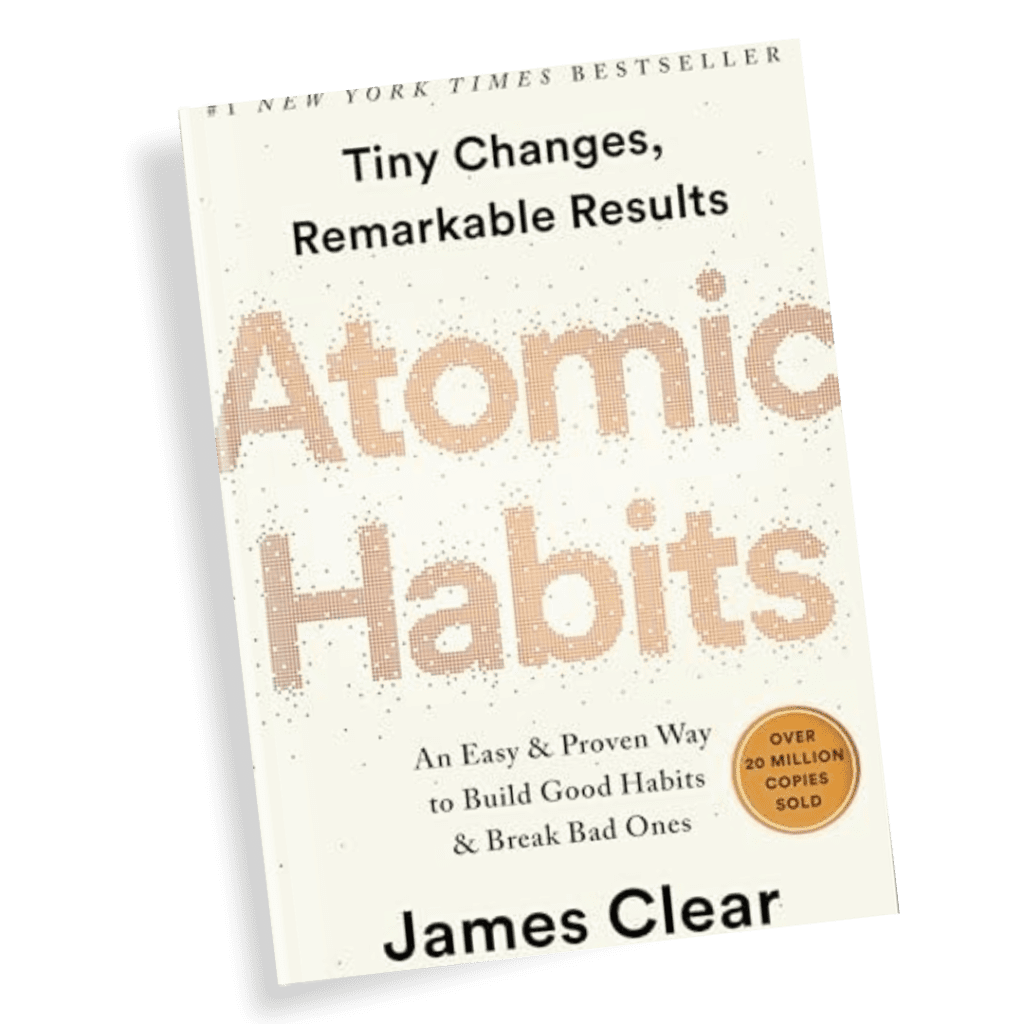
Atomic Habits: James Clear
Atomic Habits offers a proven framework for improving–every day. James Clear reveals practical strategies that will teach you exactly how to form good habits, break bad ones, and master the tiny behaviors that lead to remarkable results.